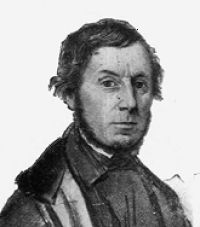
Ottaviano-Fabrizio Mossotti

Ottaviano-Fabrizio Mossotti

Summary

Portrait of Ottaviano-Fabrizio Mossotti Ottaviano-Fabrizio Mossotti Scientific Memoirs (1837)

While reflecting on these principles, in a course of lectures on natural philosophy which I gave at the University of Buenos Ayres, I conceived the idea, that if the molecules of matter, surrounded by their atmospheres, attract each other when at a greater, and repel each other when at a less distance, there must be between those two distances an intermediate point at which a molecule would be neither attracted nor repelled, but would remain in steady equilibrium
Source: Wikisource

Portrait of Ottaviano-Fabrizio Mossotti Ottaviano-Fabrizio Mossotti Scientific Memoirs (1837)

For what else, in fact, is an increase or diminution of temperature in respect to a body, than a new state in which its molecules, placed in equilibrium, form, in consequence of their being more or less widely separated, a greater or less volume. It has been known to philosophers since the time of Galileo, who was the first that clearly pointed out this difference, that we are not to confound the sensation which we experience while this new arrangement of the molecules of our body is taking place, with the motion by which it is produced.
Source: Wikisource

Portrait of Ottaviano-Fabrizio Mossotti Ottaviano-Fabrizio Mossotti Scientific Memoirs (1837)

It is a great though a common error to imagine, that the condition assumed by Æpinus, namely that the particles of matter when devoid of electricity repel one another, is in opposition to the law of universal gravitation established by the researches of Newton; for this law applies, in every instance to which inquiry has extended, to matter in its ordinary state; that is, combined with a certain proportion of electric fluid.
Source: Wikisource

Get perspective with Kwize: daily news enlightened by great literature