Electric fluid

Definition and stakes

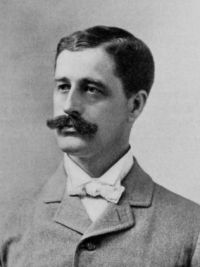
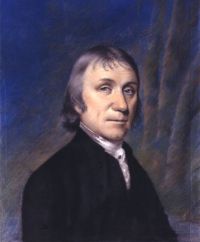
Brother Potamian,  Makers of Electricity

“ In 1786, he published a paper in which he demonstrated what he considered the principal properties of the electric fluid. These are, that this fluid does not spread itself on a substance by any chemical affinity or any elective attraction, but that it distributes itself over various bodies that are placed in contact, entirely in accordance with their shape; and also that in electrical conductors, the charge is limited to the surface of the conductor and does not penetrate to any appreciable depth. ”
Source: Gutenberg

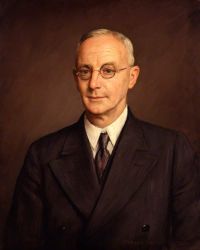
Portrait of Edmund Taylor Whittaker Edmund Taylor Whittaker,  A History of the Theories of Aether and Electricity (1910)

“ The question was actively debated as to whether the electric fluid was an element sui generis, or, as some suspected, was another manifestation of that principle whose operation is seen in the phenomena of heat. Those who held the latter view urged that the electric fluid and heat can both be induced by friction, can both induce combustion, and can both be transferred from one body to another by mere contact; and, moreover, that the best conductors of heat are also in general the best conductors of electricity. ”
Source: Wikisource

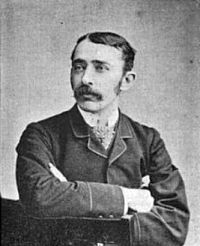
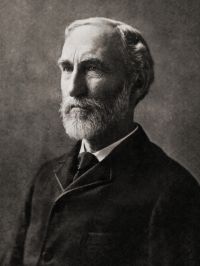
Edward Huntington Williams,  A History of Science — Volume 5

“ Negative electricity in a gas at a low pressure has thus a structure analogous to that of a gas, the corpuscles taking the place of the molecules. The 'negative electric fluid,' to use the old notation, resembles the gaseous fluid with a corpuscular instead of a molecular structure.'" Professor Thompson does not hesitate to declare that we now "know more about 'electric fluid' than we know about such fluids as air or water."*3* The results of his studies lead him, he declares, "to a view of electrification which has a striking resemblance to that of Franklin's One Fluid Theory of Electricity. ”
Source: Gutenberg

Get perspective with Kwize: daily news enlightened by great literature