Summary

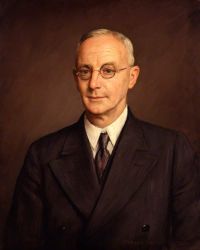
Portrait of Edmund Taylor Whittaker Edmund Taylor Whittaker A History of the Theories of Aether and Electricity (1910)

Hooke charged him with holding the doctrine that light is a material substance. Now Newton had, as a matter of fact, a great dislike of the more imaginative kind of hypotheses; he altogether renounced the attempt to construct the universe from its foundations after the fashion of Descartes, and aspired to nothing more than a formulation of the laws which directly govern the actual phenomena. His theory of gravitation, for example, is strictly an expression of the results of observation, and involves no hypothesis as to the cause of the attraction which subsists between ponderable bodies
Source: Wikisource

Portrait of Edmund Taylor Whittaker Edmund Taylor Whittaker A History of the Theories of Aether and Electricity (1910)

In spite of the advances which were effected by Maxwell and his earliest followers in the theory of electric oscillations, the gulf between the classical electrodynamics and the theory of light was not yet completely bridged. For in all the cases considered in the former science, energy is merely exchanged between one body and another, remaining within the limits of a given system; while in optics the energy travels freely through space, unattached to any material body.
Source: Wikisource

Portrait of Edmund Taylor Whittaker Edmund Taylor Whittaker A History of the Theories of Aether and Electricity (1910)

When an electric current flowing in a straight wire is gradually increased in strength from zero, the surrounding space becomes filled with lines of magnetic force, which have the form of circles round the axis of the wire. Poynting, adopting Faraday's idea of the physical reality of lines of force, assumed that these lines of force arrive at their places by moving outwards from the wire; so that the magnetic field grows by a continual emission from the wire of lines of force, which enlarge and spread out like the circular ripples from the place where a stone is dropped into a pond.
Source: Wikisource

Get perspective with Kwize: daily news enlightened by great literature