Faraday

Definition and stakes

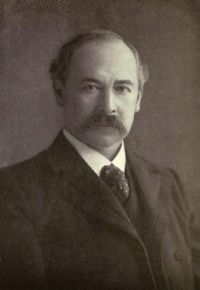
Portrait of Silvanus P. Thompson Silvanus P. Thompson,  Michael Faraday, His Life and Work

“ Nobody can deny that this new theory of electricity and magnetism, originated by Faraday and developed by Maxwell, is in itself well consistent, in perfect and exact harmony with all the known facts of experience, and does not contradict any one of the general axioms of dynamics, which have been hitherto considered as the fundamental truths of all natural science, because they have been found valid, without any exception, in all known processes of nature. ”
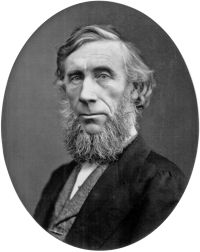
Source: Gutenberg

J. H. Gladstone,  Michael Faraday

“ As a source of success there stands out also his enthusiasm. A new fact seemed to charge him with an energy that gleamed from his eyes and quivered through his limbs, and, as by induction, charged for the time those in his presence with the same vigour of interest. Plücker, of Bonn, was showing him one day in the laboratory at Albemarle Street his experiments on the action of a magnet on the electric discharge in vacuum tubes. Faraday danced round them; and as he saw the moving arches of light, he cried, "Oh! to live in it!" ”
Source: Gutenberg

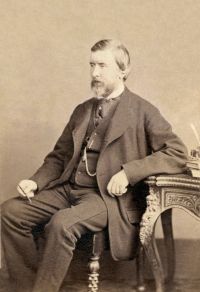
Portrait of John Tyndall John Tyndall,  Faraday as a Discoverer

“ A point highly illustrative of the character of Faraday now comes into view. He gave an account of his discovery of Magneto-electricity in a letter to his friend M. Hachette, of Paris, who communicated the letter to the Academy of Sciences. The letter was translated and published; and immediately afterwards two distinguished Italian philosophers took up the subject, made numerous experiments, and published their results before the complete memoirs of Faraday had met the public eye. This evidently irritated him. ”
Source: Gutenberg

Get perspective with Kwize: daily news enlightened by great literature