John Ambrose Fleming

Biographical details

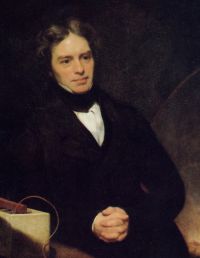
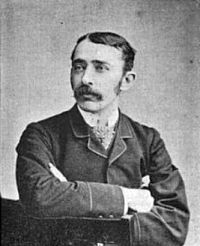
Portrait of John Ambrose Fleming John Ambrose Fleming,  1911 Encyclopædia Britannica (1911)

“ We arbitrarily call the potential of the earth zero, since all potential difference is relative and there is no absolute potential any more than absolute level. We call the difference of potential between a charged conductor and the earth the potential of the conductor. Hence when a body is charged positively its potential is raised above that of the earth, and when negatively it is lowered beneath that of the earth. Potential in a certain sense is to electricity as difference of level is to liquids or difference of temperature to heat. ”
Source: Wikisource

Portrait of John Ambrose Fleming John Ambrose Fleming,  1911 Encyclopædia Britannica, Volume 27… (1911)

“ The science of dynamics, as far as that part of it is concerned which deals with the motion and energy of material substances, starts from certain primary definitions concerning the measurable quantities involved. In constructing a system of physical units, the first thing to consider is the manner in which we shall connect the various items. What, for instance, shall be the unit of force, and how shall it be determined by simple reference to the units of mass, length and time? ”
Source: Wikisource

Portrait of John Ambrose Fleming John Ambrose Fleming,  1911 Encyclopædia Britannica (1911)

“ Amongst the memorable achievements of the ten days which Faraday devoted to this investigation was the discovery that a current could be induced in a conducting wire simply by moving it in the neighbourhood of a magnet. One form which this experiment took was that of rotating a copper disk between the poles of a powerful electric magnet. He then found that a conductor, the ends of which were connected respectively with the centre and edge of the disk, was traversed by an electric current. ”
Source: Wikisource

Get perspective with Kwize: daily news enlightened by great literature