Claud Field, Mystics and Saints of Islam
“ Many a brilliant spark is born where the hammers ply, But a lurking thief is there; prompt, with finger sly, Spark on spark he puts them out, sparks which might have soared Perish underneath his touch. ”
A spark is an incandescent particle, often produced through pyrotechnics, metalworking, or combustion, marked by its fleeting, luminous presence. Writers have long examined its dual character—both a physical occurrence and a symbol of ignition or inspiration. Benjamin Franklin described sparks as concrete expressions of electricity, while R.M. Ballantyne depicted them as playful beings, and Jean-Henri Fabre connected them to humanity’s control over natural forces.
Symbolically, sparks represent both creation and destruction, from the fiery depictions in religious writings to their function as symbols of connection, as seen in Willa Cather’s depiction of human relationships. This theme weaves together science, art, and philosophy, revealing sparks as both actual flashes and symbols of transformative power.
Claud Field, Mystics and Saints of Islam
“ Many a brilliant spark is born where the hammers ply, But a lurking thief is there; prompt, with finger sly, Spark on spark he puts them out, sparks which might have soared Perish underneath his touch. ”
 Benjamin Franklin,
Experiments and Observations on Electricity
(1751)
Benjamin Franklin,
Experiments and Observations on Electricity
(1751)
“ Now let the globe be turned, and you see a spark strike from the bullet to the wire of the bottle, and the same instant you see and feel an exactly equal spark striking from the coating on your knuckle, and so on spark for spark. ”
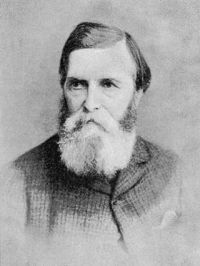 R. M. Ballantyne,
The Battery and the Boiler
(1883)
R. M. Ballantyne,
The Battery and the Boiler
(1883)
“ We prefer to call him a Spark, because in that form only is he visible—at least when handled by man. Talking of that, it was not until the last century that master minds found out how to catch and handle our Spark. In all the previous centuries he had been roaming gaily about the world in perfect freedom; sometimes gliding silently to and fro like an angel of light; sometimes leaping forth with frightful energy in the midst of raging tempest, like a destructive demon—ripping, rending, shattering all that attempted to arrest his course. ”
 Jean-Henri Fabre,
The Story-book of Science
Jean-Henri Fabre,
The Story-book of Science
“ Every time he brings his finger near the cylinder, he draws a spark like that received by the exciter. Emboldened by his example, the spectators draw near and evoke the electric explosion. They crowd around the wonderful cylinder that now contains the fire from heaven, called down by man’s genius; each one wishes to call forth the lightning, and each wishes to see sparkle between his fingers the fulminant substance descended from the clouds. So they play with the thunder for half an hour with impunity, when all at once a violent spark reaches de Romas and almost knocks him over. ”
R. M. Ballantyne,
The Battery and the Boiler: Adventures in Laying of Submarine Electric Cables
“ But there is one Spark in this world—a grand, glowing, gushing fellow—who has not his equal anywhere. He is old as the hills—perhaps older—and wide as the world—perchance wider. Similar to ordinary sparks in some respects, he differs from them in several important particulars. ”
Various, The Path, Vol. I.—1886-'7
“ A human heart that has at its centre a small spark—the spark expands and the heart disappears—while a deep pulsation seems to pass through me. At once identity is confused, I grasp at myself; and again the heart reappears with the spark increased to a large fiery space. ”
Katherine Shortall, Where the Sabots Clatter Again
“ Before reentering the woods I looked back and saw the blue-coated figure offering a light to the green coat. From cigarette tip to cigarette tip the fraternal spark was being transmitted: the spark that crosses borders and nationalities, that glows in the darkness, and puts mankind at peace. ”
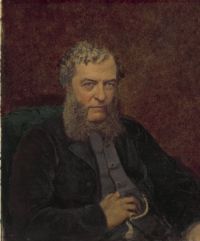 John Lort Stokes,
Discoveries in Australia, Volume 2…
(1846)
John Lort Stokes,
Discoveries in Australia, Volume 2…
(1846)
“ A single spark would instantly have wrapped the whole face of the country in one sheet of fire. Slight blasts of heated withering air, as if from an oven, would occasionally strike the face as we walked along ”
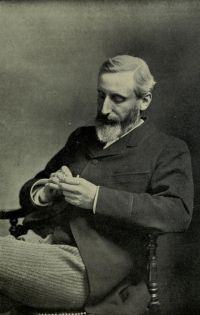 Grant Allen,
Falling in Love; With Other Essays on More Exact Branches of Science
Grant Allen,
Falling in Love; With Other Essays on More Exact Branches of Science
“ All that passes in each case is a huge spark—a commotion, not a material object. It is in principle just like the spark from an electrical machine; but while the most powerful machine of human construction will only send a spark for three feet, the enormous electrical apparatus provided for us by nature will send one for four, five, or even ten miles. Though lightning when it touches the earth always seems to us to come from the clouds to the ground, it is by no means certain that the real course may not at least occasionally be in the opposite direction. ”
 Willa Cather,
The Song of the Lark
Willa Cather,
The Song of the Lark
“ The spark in his eye, which is one’s very self, caught the spark in hers that was herself, and for a moment they looked into each other’s natures. ”
Charles Meymott Tidy, The Story of a Tinder-box
“ I take the steel and the flint, and striking them together I get sparks. I want you to ask yourselves, Where do the sparks come from? Each spark is due to a minute piece of iron being knocked off the steel by the blow of flint with steel. Note the precise character of the spark. Let me sprinkle some iron filings into this large gas flame. You will notice that the sparks of burning iron filings are very similar in appearance to the spark I produce by the collision of my flint and steel. ”
Benjamin Franklin,
The Complete Works in Philosophy…
“ The spark, having taken a new direction, must now act on, or most strongly repel the column of air which lies in that direction, and consequently must condense that column in the same manner as the former, when the spark must again change its course, which course will be thus repeatedly changed, till the spark reaches the body that attracted it. ”
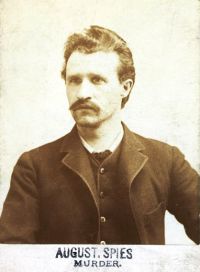 August Vincent Theodore Spies,
The Chicago Martyrs
(1899)
August Vincent Theodore Spies,
The Chicago Martyrs
(1899)
“ Here you will tread upon a spark, but here, and there, and behind you, and in front of you, and everywhere, flames will blaze up. It is a subterranean fire. You cannot put it out. The ground is on fire upon which you stand. ”
 Francis Galton,
The Art of Travel; Or, Shifts and Contrivances Available in Wild Countries
Francis Galton,
The Art of Travel; Or, Shifts and Contrivances Available in Wild Countries
“ The spark made by a flint and steel, consists of a thin shaving of steel, scraped off by the flint and heated by the arrested motion. When well struck, the spark is white-hot and at that temperature it burns with bright scintillations in the air, just as iron that is merely red-hot burns in pure oxygen. ”
Benjamin Franklin,
The Complete Works in Philosophy…
“ The consequence is, spark follows spark till the equilibrium is restored. Touch the top first, and on approaching the bottom, with the other end, you have a constant stream of fire from the wire entering the bottle. Touch the top and bottom together, and the equilibrium will instantly be restored, the crooked wire forming the communication. ”
 Josiah Royce,
The World and the Individual, First Series
(1899)
Josiah Royce,
The World and the Individual, First Series
(1899)
“ Through the experiences of a long fast, the disciple has been taught to observe how the psychical principle can be made to fade away, like a dying coal, until only a spark remains, and how, when food is again taken, the psychical principle flames once more like the spark that finds fuel. ”
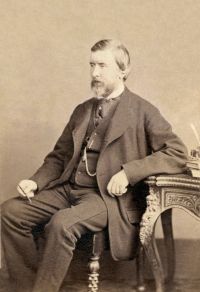 John Henry Pepper,
The Boy's Playbook of Science
John Henry Pepper,
The Boy's Playbook of Science
“ Whilst standing on the stool, sparks may be obtained from his body, and if some tow is tied over a brass ball, and moistened with a little ether, and presented to the tip of his finger, a spark flies off which quickly sets fire to the inflammable liquid. ”
Evelyn Everett-Green, Eustace Marchmont: A friend of the people (1895)
“ A puff of wind down the chimney will send a spark into it, and then comes an explosion. It’s something like that when you educated and clever gentlemen begin to bring your fire near the hot inflammable minds of our ignorant lads. You don’t mean there to be any spark; you mean to get your material well dried and in good working order, so that it can be used for right and legitimate ends ”
 Charles Dudley Warner,
A-Hunting of the Deer, and other essays…
(1906)
Charles Dudley Warner,
A-Hunting of the Deer, and other essays…
(1906)
“ How the sparks mount and twinkle and disappear like tropical fire-flies, and all the leaves murmur, and clap their hands! Some of the sparks do not go out: we see them flaming in the sky when the flame of the fire has died down. ”
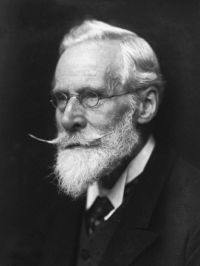 William Crookes,
Popular Science Monthly
(1880)
William Crookes,
Popular Science Monthly
(1880)
“ To suggest some idea of this vast number, I take the exhausted bulb, and perforate it by a spark from the induction-coil. The spark produces a hole of microscopical fineness, yet sufficient to allow molecules to penetrate and to destroy the vacuum. The inrush of air impinges against the vanes and sets them rotating after the manner of a windmill. Let us suppose the molecules to be of such a size that, at every second of time, a hundred million could enter. ”
John G. Neihardt, The River and I
“ I began to crank, praying steadily for a miracle. Now and then I managed to coax forth a gaseous chortle or two. The convention on the landing understood every chortle in a truly marvellous way."It's the spark-plug, that's sure!" announced one with an air of finality. "When an engine has run for a while (!) the spark-plug gets all smutted up. Have you cleaned your spark-plug?" ”
“ If a jar be discharged through this vacuum, it presents the appearance of a very dense body of fire, darting directly through the centre of the vacuum, without touching the sides; whereas, when a single spark passes through, it generally goes more or less to the side, and a finger placed on the outside of the glass will draw it wherever a person pleases. If the vessel be grasped by both hands, every spark is felt like the pulsation of a large artery; and all the fire makes towards the hands. ”
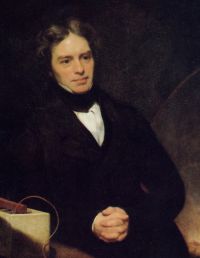 Michael Faraday,
Experimental Researches in Electricity…
Michael Faraday,
Experimental Researches in Electricity…
“ It is curious to observe the relation of glow, brush, and spark to each other, as produced by positive or negative surfaces; thus, beginning with spark discharge, it passes into brush much sooner when the surface at which the discharge commences (1484.) is negative, than it does when positive; but proceeding onwards in the order of change, we find that the positive brush passes into glow long before the negative brush does. ”
“ The Spark Discharge.—In practice the wire w is not actually used, but the air itself suddenly becomes a conductor and makes the connection. When the electric field at a point in the air exceeds a certain limiting strength, the air seems to break down and {85} suddenly become a conductor and remains one for a short time. This breaking down is accompanied by light and heat, and is known as the spark discharge or electric spark. ”
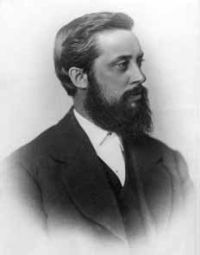 William Arnold Anthony,
Elementary Text-book of Physics
(1897)
William Arnold Anthony,
Elementary Text-book of Physics
(1897)
“ The Spark, Brush, and Glow Discharges.—When a conductor is charged to a high potential and brought near another conductor which is joined to ground, a spark or a series of sparks will pass from one to the other. This phenomenon and others associated with it are most readily studied by the use of an electrical machine or an induction coil, between the electrodes of which a great difference of potential can be easily produced. ”
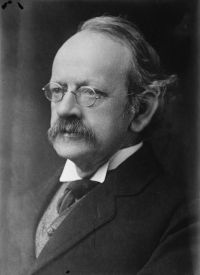 Joseph John Thomson,
1911 Encyclopædia Britannica, Volume 6…
(1911)
Joseph John Thomson,
1911 Encyclopædia Britannica, Volume 6…
(1911)
“ The results of their experiments show that for sparks considerably longer than the critical spark length, the relation between the potential difference V and the spark length l may be expressed when the electrodes are large with great accuracy by the linear relation V = c + blp, where p is the pressure and c and b are constants depending on the nature of the gas. When the sparks are long the term blp is the most important and the sparking potential is proportional to the spark length. ”
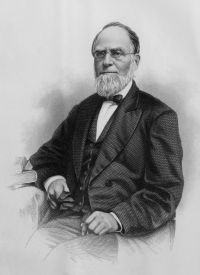 John S. C. Abbott,
The Wonders of the World
(1856)
John S. C. Abbott,
The Wonders of the World
(1856)
“ The stream, or spark, from the machine to the hand, represents the shaft of lightning from the clouds to the earth; and the snapping noise of the diminutive spark corresponds with the explosion produced by the lightning, which we call thunder. In what manner the clouds become electrified, and, in short, what is the nature of electricity itself, our present range of experiments so little qualify us to determine, that a century will perhaps elapse before a philosophical precision can be attained. ”
John B. Rathbun, Practical Hand Book of Gas, Oil and Steam Engines
“ Remember that a hot spark causes rapid combustion, and will fire a greater range of mixtures and “leaner” charges, than a straggling, thin, weak spark. Spark coils that give poor results with a long spark gap under high compression are often benefited by the shortening of the spark gap. Shortening the gap will increase the heat of the spark, and will insure the passing of a spark each time that the timer makes contact. ”
Michael Faraday,
Experimental Researches in Electricity…
“ To sum up these considerations respecting the character and condition of the brush, I may state that it is a spark to air; a diffusion of electric force to matter, not by conduction, but disruptive discharge, a dilute spark which, passing to very badly conducting matter, frequently discharges but a small portion of the power stored up in the conductor; for as the air charged reacts on the conductor, whilst the conductor, by loss of electricity, sinks in its force (1435.) ”
Popular Science Monthly (1874)
“ Such being the rough conclusions reached concerning the duration of the spark upon a grand scale, let us now consider the results of experiment upon it where all the conditions are in command. In 1835, Mr. Wheatstone attempted to measure the spark of a Leyden jar charged by a common frictional machine. The light from the spark was received upon a mirror mounted upon an axle capable of a high rate of revolution. The image of the spark, being thrown upon the mirror, was reflected to a distant point, and the time of the spark was inferred from the fixity or movement of the image. ”
Michael Faraday,
Experimental Researches in Electricity…
“ When nitro-sulphuric acid is used, the spark is more powerful, but local chemical action can then commence, and proceed without requiring metallic contact.201.It has been universally supposed that no spark is produced on making the contact between a single pair of plates. I was led to expect one from the considerations already advanced in this paper. The wire of communication should be short; for with a long wire, circumstances strongly affecting the spark are introduced. ”
Cyclopedia of illustrations for public speakers
“ If a spark or point of flame be rapidly swung around in a circular path it is no longer seen as a spark or point, but as a continuous circle. Drops of falling rain appear to the eye as continuous slanted lines or streams. ”
Michael Faraday,
Experimental Researches in Electricity…
“ The path of the spark, or of the discharge, depends on the degree of tension acquired by the particles in the line of discharge, circumstances, which in every common case are very evident and by the theory easy to understand, rendering it higher in them than in their neighbours, and, by exalting them first to the requisite condition, causing them to determine the course of the discharge. ”
Michael Faraday,
On the various forces of nature and their relations to each other
(1894)
“ Instead of having a machine which we are obliged to turn for a long time together, we have here a chemical power which sends forth the spark; and it is wonderful and beautiful to see how this spark is carried about through these wires. ”
Wiliam Cabell Bruce, Benjamin Franklin; Self-Revealed…
“ If A and B approach to touch each other, the spark is stronger, because the difference between them is greater: After such touch there is no spark between either of them and C, because the electrical fire in all is reduced to the original equality. If they touch while electrising, the equality is never destroy'd, the fire only circulating. ”
Michael Faraday,
Experimental Researches in Electricity…
“ There are a few circumstances connected with the production of this spark by a single pair of plates, which should be known, to ensure success to the experiment202. When the amalgamated surfaces of contact are quite clean and dry, the spark, on making contact, is quite as brilliant as on breaking it, if not even more so. When a film of oxide or dirt was present at either mercurial surface, then the first spark was often feeble, and often failed, the breaking spark, however, continuing very constant and bright. ”
 Sir Oliver Lodge,
Signalling across space without wires
(1900)
Sir Oliver Lodge,
Signalling across space without wires
(1900)
“ The point of present interest is the cohesion which sets in between the knobs when the spark occurs: an extremely feeble spark was found sufficient to produce the effect, provided the surfaces were already almost infinitely close together, i.e., provided they were already in what would be called contact, with the merest imperceptible film of (probably) oxide separating them, just the kind of film which a chemical flux is useful in removing. ”
Roger B. Whitman, Motor-car principles; the gasoline automobile (1907)
“ The jump-spark or high-tension system of ignition depends on the production of a current at such a pressure that it can jump from one point to another through high resistance, such as is presented by air at ordinary or low temperature, and especially when compressed, the spark occurring as it passes. ”
Sutton E. Griggs, Overshadowed: A Novel
“ Either that, or there is a Providence who permits this disastrous meeting of uncongenial spirits, in order that out of the collision, evil in itself, there may come a spark of light, as when a negative pole meets a positive, and the electric spark results. ”
Sir J. A. Fleming, Hertzian Wave Wireless Telegraphy
“ If, however, the air pressure is increased above the normal by including the spark balls in a vessel in which air can be compressed, then the spark length, corresponding to a given potential difference, very rapidly decreases. ”
Walter C. Runciman, Gas and Oil Engines, Simply Explained
“ As we do not propose to enter into more than a brief explanation of why and how this apparatus generates current to produce the required spark, perhaps a simple analogy will make matters most intelligible to any reader not well acquainted with electrical phenomena. We know that when a current of electricity is flowing in a wire, and the wire be [Pg 47] suddenly broken, a spark will occur at the point of breakage. ”
Benjamin FranklinSir J. A. FlemingRoger B. WhitmanCharles Meymott TidySir Oliver LodgeJohn B. RathbunWilliam GarnettThomas M. St. JohnMichael FaradayVariousR. M. BallantyneJean-Henri FabreAugust Vincent Theodore SpiesFrancis GaltonClaud FieldWilla CatherGrant AllenJohn Lort StokesKatherine Shortall