“ The larvæ of the fireflies crawled slowly but happily over the fungus-covered mountainside, and great glow-worms clambered upon the shining tops of the toadstools and rested there, twin broad bands of bluish fire burning brightly within their translucent bodies.They were the females of the firefly race, which never attain to legs and wings, but crawl always upon the earth, merely enlarged creatures in the forms of their own larvæ. Moths soared overhead with mighty, throbbing wing-beats, and all the world seemed a paradise through which no evil creatures roamed in search of prey. ”
Firefly
Definition and stakes
Fireflies, or Lampyridae, are bioluminescent beetles known for their ability to emit light, which is primarily used for mating and as a warning signal. Authors such as Murray Leinster explored their larval stages and ecological roles, while Lafcadio Hearn emphasized their cultural importance in Japanese traditions.
William Beebe focused on their role as warning signals, and Vishnu Sharma employed them metaphorically in fables. These diverse viewpoints highlight fireflies as both biological wonders and symbolic entities, their glow connecting natural science with human imagination.
Quotes about “firefly”
Vishnu Sharma, The Panchatantra (1925)
“ In a part of a forest was a troop of monkeys who found a firefly one winter evening when they were dreadfully depressed. On examining the insect, they believed it to be fire, so lifted it with care, covered it with dry grass and leaves, thrust forward their arms, sides, stomachs, and chests, scratched themselves, and enjoyed imagining that they were warm. One of the arboreal creatures in particular, being especially chilly, blew repeatedly and with concentrated attention on the firefly. ”
 Lafcadio Hearn,
Kotto: Being Japanese Curios, with Sundry Cobwebs
Lafcadio Hearn,
Kotto: Being Japanese Curios, with Sundry Cobwebs
“ Immediately after sunset, the firefly-hunter goes forth, with a long bamboo pole upon his shoulder, and a long bag of brown mosquito-netting wound, like a girdle, about his waist. When he reaches a wooded place frequented by fireflies,—usually some spot where willows are planted, on the bank of a river or lake,—he halts and watches the trees. ”
Abigail Stanley Hanna, Withered Leaves from Memory's Garland
“ But where shall we stop? the spider, the cricket, the beetle, the glow-worm, with his feeble lamp, the firefly that flies twinkling through the air all the "midsummer night," and every beast that roams the field, whether wild or tame, all--all have their proper sphere, and are in proper order. ”
Leonard Haseman, An Elementary Study of Insects
“ The firefly is a beetle, and begins to make its appearance the latter part of June when the darkest nights may be one solid glow of fire. They live largely in damp places and bottoms at night are specked with their tiny flashes of light. ”
“ But they are nearing the heavenly land; and some night, perhaps when they are not expecting it, they will leave the dreariness and desolation all behind them; they will awake in a world of beauty such as human fancy never dreamed of.Well do I remember the night when on seeing the sudden glow of a firefly there flashed on my mind the idea of the ease and naturalness with which, after all, this fleshly body of ours may become immortal and glorious. ”
 W. H. Hudson,
The Naturalist in La Plata
W. H. Hudson,
The Naturalist in La Plata
“ The firefly, a soft-bodied, slow-flying insect, is easily caught and injured, but it is not fit for food, and, therefore, says the theory, lest it should be injured or killed by mistake, it has a fiery spark to warn enemies---birds, bats, and rapacious insects--that it is uneatable. ”
 William Beebe,
The Log of the Sun: A Chronicle of Nature's Year
William Beebe,
The Log of the Sun: A Chronicle of Nature's Year
“ When insects seek their mates by day, their characteristic colours or forms may be confused with surrounding objects; or those which by night are able in that marvellous way to follow the faintest scent up wind may have difficulties when cross currents of air are encountered; but the female firefly, waiting patiently upon her lowly leaf, has unequalled opportunity for winning her 190 mate, for there is nothing to compare with or eclipse her flame. ”
Clara Dillingham Pierson, Among the Night People
“ Several very large families of Fireflies lived in the marsh and were much admired by their friends who were awake at night. Once in a while some young Firefly who happened to awaken during the day would go out and hover over the heads of the daylight people. ”
Leonard Haseman, An Elementary Study of Insects
“ The larval or grub stage is passed on the ground beneath grass, weeds and rubbish where they often prey upon other insects. In some cases the grubs may be able to produce light though as a rule the luminous grub-like creature or glow-worm is a wingless adult firefly. [76] Observations and Studies Firefly beetles on sour-dock leaf. Lower surface of firefly beetle enlarged to show the light producing segments of the abdomen.Watch for the first appearance of the fireflies in the evening and see where they come from. Do they all appear at once or only a few at first? Do they fly fast? ”
W. H. Hudson,
The Naturalist in La Plata
“ We are thus forced to the conclusion that, while the common house fly and many other diurnal insects spend a considerable portion of the daylight in purely sportive exercises, the firefly, possessing in its light a protection from nocturnal enemies, puts off its pastimes until the evening; then, when its carnival of two or three hours' duration is over, retires also to rest, putting out its candle, and so exposing itself to the dangers which surround other diurnal species during the hours of darkness. ”
Clara Dillingham Pierson, Among the Night People
“ When well away from their sleeping relatives, they lifted their wing-covers, spread their wings, and flew to the farthest corner of the marsh. They were not afraid of being punished if caught, for they were orphans and had nobody to bring them up. They were afraid that if the other Fireflies awakened they would be called "silly" or "foolish young bugs." They thought that they were old enough to take care of themselves, and did not want advice. [Pg 151] "Oh, wouldn't they make a fuss if they knew!" exclaimed the Larger Firefly. ”
Lafcadio Hearn,
Kotto: Being Japanese Curios, with Sundry Cobwebs
“ He can tell you all that is known concerning the morphology of fireflies, the physiology of fireflies, the photometry of fireflies, the chemistry of their luminous substance, the spectroscopic analysis of their light, and the significance of that light in terms of ether-vibration. By experiment he can show you that, under normal conditions of temperature and environment, the number of light-pulsations produced by one species of Japanese firefly averages twenty-six per minute; and that the rate suddenly rises to sixty-three per minute, if the insect be frightened by seizure. ”
 Helen Sherman Griffith,
Letty and the Twins
Helen Sherman Griffith,
Letty and the Twins
“ Pretty soon, down at the edge of a field of tall grasses, I saw an old firefly poking about as if he were looking for something. I stopped to see what was the matter, for it was too dark to hope to find anything, and the old firefly’s lantern gave out hardly any light at all.“‘I supposed his light was dim because the old fellow was too lazy to make it shine brighter. I had seen the gnomes blowing up their forge fires with a pair of bellows to make them burn brighter and I supposed the firefly’s lantern worked the same way. ”
Various, The Little Review, August 1915…
“ Perched upon the temple-bell, the butterfly sleeps:Even while sleeping, its dream is of play—ah, the butterfly of the grass! Many insects there are that call from the dawn to evening,Crying “I love! I love!”—but the Firefly’s silent passion,Making its body burn, is deeper than all their longing.Even such is my love .... The following poem, says the editor, was written more than eleven hundred years ago on the death of the poet’s little son: As he is so young, he cannot know the way. ”
G. H. Parker, Popular Science Monthly (1909)
“ He maintains, on what, however, is not really strong experimental evidence, that the firefly can not extinguish its light through nervous action and he believes that the phosphorescent rhythm is due to totally different factors. ”
“ It is strictly a Spanish idea, which the author has often seen in Havana. So brilliant are these tropical fireflies that with three or four placed under an inverted wineglass one can see to read fine printed matter in the nighttime. It is the common people mostly who use these insects as evening ornaments on their persons, though sometimes the most refined ladies wear them. The firefly has a hook-like integument on its body by which it is easily fastened to the hair or dress without any harm to itself. ”
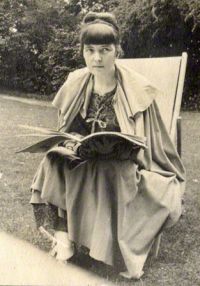
“ Light as feathers the witches fly, The horn of the moon is plain to see; By a firefly under a jonquil flower A goblin toasts a bumble-bee. ”
“ A beautiful and far-famed insect—do not mistake, I mean neither the Emperor, nor the King of Sardinia, but a much finer specimen—the fire-fly. Their bright light is evanescent, and alternates with the darkness, as if the swift whirling of the earth struck fire out of the black atmosphere; as if the winds were being set upon that planetary grindstone, and gave out such momentary sparks from their edges. Their silence is more striking than their flashes, for sudden phenomena are almost invariably attended with some noise, but these little jewels dart along the dark as softly as butterflies. ”
F. Hadland Davis, Myths & Legends of Japan
“ These hunting parties, however, have lost none of their picturesqueness, and the flashing insect has been the theme of many an exquisite poem, such as: "Ah, the cunning fireflies! being chased, they hide themselves in the moonlight!"Grown-up people, however, go out to see the fireflies with the same ardour with which they indulge in flower-viewing. To the minds of these great Nature-lovers the fireflies resemble dazzling petals of some strange fire-flower or a host of wondering stars that has left the sky to wander upon the earth. ”
 Henry David Thoreau,
Summer in Massachusetts: From the Journal of Henry D. Thoreau…
(1884)
Henry David Thoreau,
Summer in Massachusetts: From the Journal of Henry D. Thoreau…
(1884)
“ The fire-flies appear to be flying, though they may be stationary on the grass stems, for their perch and the nearness of the ground are obscured by the darkness, and now you see one here and then another there, as if it were one in motion. Their light is singularly bright and glowing to proceed from a living creature. Nature loves variety in all things, and so she adds glow-worms to fireflies, though I have not noticed any this year.–The great story of the night is the moon's adventures with the clouds. ”
 William Elliot Griffis,
Japanese Fairy World
William Elliot Griffis,
Japanese Fairy World
“ One of the species of night-flies, the most beautiful of all, is a source of much amusement to the ladies. Hanging the cage of glittering insects on their verandahs, they sit and watch the crowd of winged visitors attracted by the fire-fly's light. What brings them there, and why the fire-fly's parlor is filled with suitors as a queen's court with courtiers, let this love story tell. ”
William E. Hutchinson, Byways Around San Francisco Bay
“ Fireflies light their tiny lanterns and flash out their signals, like beacon lights in the darkness, while, ringing up from the valley, the call of the whip-poor-will echoes clear and sweet, each syllable pronounced as distinctly as if uttered by a human voice. ”
Edmund Selous, The romance of insect life (1914)
“ In tropical countries fire-flies take the place of glow-worms with us, and though the light which these give out is not so soft and poetic as the lovely green or golden green one of the latter, yet it is more effectively beautiful, owing to the way in which it wanders through the night, appearing and disappearing in successive brilliant flashes. For here the beetle that carries the lamp is a flier, and flashes it about at pleasure through the air, having the power, it would seem, either of showing or concealing its light. ”
 Adelbert von Chamisso,
Peter Schlemihl
Adelbert von Chamisso,
Peter Schlemihl
“ The Fire-flies alone heard the joyous peal, for they were akin to the flowers, through their common ancestor, Light. They inquired of their nearest relation, the Lily of the Valley, and from her they heard that a large flower had just passed along the footpath more blooming than the loveliest rose, and with two stars more brilliant than those of the brightest fire-fly, and that it must needs be their King. Then all the Fire-flies flew up and down the footpath, and sought everywhere, till at length they came, as the Dragon-fly had hoped they would, to the cave. ”
Harry Collingwood, The Rover's Secret: A Tale of the Pirate Cays and Lagoons of Cuba
“ Fireflies, visible only as tiny sparks of light, flitted and glanced and whirled hither and thither against the black shadows of the foliage, whilst the black water, so highly phosphorescent that every tiniest ripple was edged with its own individual and separate line of silvery fire, glowed and darkened, sparkled and flashed, and at times seemed to fairly throb with liquid lightning as the countless living creatures within it stirred its sleeping depths. ”
“ The fire-fly is more splendid, more surprising, in its flashes. It flashes and is dark, and we watch, staring at the black darkness, for the succeeding flash. It is like watching for rockets to explode in the dark sky: there is an element of impatience which interferes with the pleasure. To admire and have a perfect satisfaction, the insects must be in numbers, in multitudes, sparkling everywhere in the darkness, so that no regard is paid to any individual light, but they are seen as we see snowflakes. ”
Mary Hazelton Blanchard Wade, Our Little Cuban Cousin
“ The light of the candle attracted the insects, then it was an easy matter to catch hundreds of them in a fine thread net. We should call them fireflies, but they are much larger and more brilliant than any insect we have ever seen. ”
Various, The Southern States, March, 1894
“ As the mystic dusk robes the familiar scenery with a pall, we hear the insect world, if it be the proper season, conversing in a thousand tongues, startled anon by the shrill cry of a night bird, and possibly we wonder if the momentary shadow on the orb of the moon was the vagrant pinion of Minerva’s bird, or the flashing stroke of the eagle, put to flight from his eyry slumber. ”
Thomas Alfred Coward, Bird Haunts and Nature Memories… (1922)
“ The bird voices are accompanied by a constant murmur, which rises and falls in volume and varies in quality. A puff of wind raises a gentle rustle amidst the leaves; a gleam of sunshine and the buzz of millions of gauzy insect wings swells into a boom. ”
 John Ruskin,
The Crown of Wild Olive
John Ruskin,
The Crown of Wild Olive
“ And the fire-flies fly round the edge of the forests all the night long; you wade in fire-flies, they make the fields look like a lake trembling with reflection of stars; but you must take care not to touch them, for they are not like Italian fireflies, but burn, like real sparks. ”
 Louis Figuier,
The Day After Death; Or, Our Future Life According to Science…
Louis Figuier,
The Day After Death; Or, Our Future Life According to Science…
“ Every one knows that the insect world, the cold and motionless chrysalis, rends itself asunder that the brilliant butterfly may come forth. If you examine the butterfly a moment after it has left its temporary tomb, you will find it trembling and panting with the pain of bursting through the trammels which had held it. It needs to rest, to calm itself, and to collect its strength before it soars away into the air which it is destined to traverse. ”
 Maurice Baring,
Orpheus in Mayfair, and Other Stories and Sketches
Maurice Baring,
Orpheus in Mayfair, and Other Stories and Sketches
“ At that moment there was a great whirr in the air, and from out of the green stalks rose a flight of millions and millions of enormous broad-winged butterflies of every hue and description—silver, gold, purple, brown and blue. Some with dark and velvety wings like the Purple Emperor, or the Red Admiral, others diaphanous and iridescent as dragon-flies. Others again like vast soft and silvery moths. They rose from every part of that green plain of stalks, they filled the sky, and then soared upwards and disappeared into the silvery cloudland. ”
William Beebe,
The Log of the Sun: A Chronicle of Nature's Year
“ Of these strange sea folk we know nothing except from the fragments which are brought to the surface by the dredge; but over our fields and hedges, throughout the summer nights, we may see and study most interesting examples of creatures which produce their own light. Heedless of whether the moon shines brightly, or whether an overcast sky cloaks the blackest of nights, the fireflies blaze their sinuous path through life. ”
Theodore Wood, Butterflies and Moths, Shown to the Children (1909)
“ Well, just look at their feelers or “antennæ,” as they are often called. You will see that those of butterflies are thickened at the very tips, while those of moths are not. Besides this, the body of a butterfly is nipped in at the middle much more than that of a moth. And when a butterfly is at rest it always folds its wings together over its back, while moths nearly always spread them out, or allow them to hang down, or wrap them round their bodies. ”
 Jean-Henri Fabre,
Animal Life in Field and Garden
Jean-Henri Fabre,
Animal Life in Field and Garden
“ They fly mostly in the evening twilight, or even in the night. Compare the antennæ of the cabbage-butterfly with those of the silkworm-moth or the leopard-moth and you will see how easy it is to distinguish a butterfly from a moth, a cocoonless from a cocoon-spinning insect. ”
