“ What an experience it would be to look on the death's-head moth in a state of nature, feeding among the flowers in the early evening, with some sunlight to show the delicate grey-blue markings and mottlings of the upper- and the indescribable yellow of the under-wings—is there in all nature so soft and lovely a hue? ”
Moth
Definition and stakes
The moth, a recurring symbol in literature, represents transformation, fragility, and the interplay between light and shadow. Writers from diverse backgrounds have examined its appeal, from W.H. Hudson’s poetic admiration for the death’s-head moth’s “soft and lovely” colors to Theodore Wood’s detailed description of its feeding behavior.
Karel Čapek highlights its endurance, while Jennette Lee adds layers of metaphor, connecting it to human relationships. These differing viewpoints emphasize the moth’s lasting significance as a link between the natural world and deeper existential thought.
Quotes about “moth”
Winthrop Packard, Old Plymouth Trails
“ Thus it is that a lovely white moth flits often in the veriest gray of dawn just to the eastward of where I lie. It always seems as if he were a condensation out of the white mists that are born in that darkest hour when the night winds cease and that runic rhyme of the pines is lulled for a time. He seems as transparent as they and is nothing but the ghost of a moth as he passes from one head of goldenrod bloom to another. Some mornings he vanishes in the amber glow that ushers in the daylight and then I think I have merely been dreaming of lepidoptera. ”
 Jean Paul,
Hesperus; or, Forty-Five Dog-Post-Days…
Jean Paul,
Hesperus; or, Forty-Five Dog-Post-Days…
“ Fall willingly, O star caught in the atmosphere of the earth; the stars above the earth also, as well as thyself, fall headlong into their distant graves,—the sea of worlds without shore or bottom wells up here, dries up there; the great moth, the earth, flies round the sunlight and sinks into the light and is consumed;—O Julius, who sees and sustains the fluttering particle of dust on the moth, in the midst of the fermenting, blooming, dissolving chaos? ”
 John Coleman Adams,
William Hamilton Gibson: artist…
John Coleman Adams,
William Hamilton Gibson: artist…
“ Filled with wonder, I sit and watch as though in a dream, awaiting the revelation from this mysterious earthly messenger, when suddenly the encasement swells and breaks, the cerements are burst, and the strange shape gives birth to the form of a beautiful moth—a tender, trembling thing, which emerges from the empty shell and creeps quivering upon an overhanging spray. ”
Theodore Wood, Butterflies and Moths, Shown to the Children (1909)
“ On a hot summer’s day you may often see this beautiful moth hovering in front of geraniums and other flowers in the garden, with its long trunk plunged deeply down into the blossoms in order to suck up their sweet juices. And if you stand a few feet away and listen carefully, you will hear a low humming noise, which is caused by the rapid movements of the wings. ”
J. Vrchlický, A Book of Czech Verse — "Spring Night" and "Christmas" (1958)
“ On birds unsleeping, shimmering starlight fell. One sings among the grass, One in the apple tree, And pours its pearls within each flowery bell. A light is winking through A cottage window pane; A moth is flying whitely round the glow. ”
G. Christopher Davies, The Swan and Her Crew
“ Frank said,—"I should not have seen that moth if my face had not almost touched it. Its colour suits the tree-trunk so admirably that it looks just like a piece of the rough bark. I suppose it knows that, and rests on the oak-tree for safety.""Yes," said Dick; "I have read that many moths and butterflies are so like the substances on which they rest by day, that they can scarcely be distinguished from them, and of course there must be a meaning in it. ”
J. G. Wood, The Common Objects of the Country
“ Carry the imprisoned moth into the fields, and even there the eager suitors will arrive from all quarters, and boldly alight on the box while in the hand of the entomologist.More wonderful must be the influence that can emanate from so small a creature, and extend to so great a distance—an influence which, although entirely inappreciable by any human sense, exercises so potent a sway on all sides, and to so great a distance. ”
 Karel Čapek,
‘And so ad infinitum’ (The Life of the Insects…
(1924)
Karel Čapek,
‘And so ad infinitum’ (The Life of the Insects…
(1924)
“ Moths.All hail, all hail! Tramp. Life and death—seems they’re both good if we know how to treat ’em. I’m a battered old moth, I am, but I’ll dance with yer! All hail to life! Moths. All hail, all hail! ”
 Jennette Lee,
The Scientist and the Moth
(1905)
Jennette Lee,
The Scientist and the Moth
(1905)
“ She was very beautiful, laughing there—more beautiful than any moth. He suddenly felt for his glasses to rub them. But he had no glasses. Ah, it was truly another world, and he could see far into the clear eyes, deep—deep. "Come," she said. She was holding out her hand,—the small brown hand,—and he covered it with his own, and they wandered through the forest, sometimes swiftly, along cleared spaces, as if wings bore them, and sometimes slowly, looking from side to side and looking long at each other. Once she stopped and leaned over a bush with hushed breath. "Look!" she said. ”
 Gene Stratton-Porter,
Moths of the Limberlost: A Book About Limberlost Cabin
Gene Stratton-Porter,
Moths of the Limberlost: A Book About Limberlost Cabin
“ If they are kept cool enough that they do not emerge until May or June, then you have one of the most exquisite treats nature has in store for you, in watching the damp spot spread on the top of the cocoon where an acid is ejected that cuts and softens the tough fibre, and allows the moth to come pushing through in the full glory of its gorgeous birth. Nowhere in nature can you find such delicate and daintily shaded markings or colours so brilliant and fresh as on the wings of these creatures of night. ”
Edwin Tenney Brewster, Natural Wonders
“ That is why the swarms of moths collect around the arc lights on the streets, fly into lighted rooms thru unscreened windows in the evening, circle about the reading lamp, or if the light chances to be a candle with an uncovered flame, fly into it and are burned.People will tell you that the moth is curious, wants to see what the light is. But he isn’t; any more than the leaf is curious to look out of the window to see what is going on in the street. Both alike simply turn toward the brightest light. The moth, having turned toward the light, when he flies, flies toward it. ”
Gene Stratton-Porter,
Moths of the Limberlost: A Book About Limberlost Cabin
“ Then one of them approached a thistle head opposite me in such a way its antennae and the long tongue it thrust into the bloom could be seen. That proved it was not a bee, and punishment did not await any one who touched it.There were so many that with one sweep of the net two were captured. They were examined to my satisfaction and astonishment. They were moths! Truly moths, feeding in the brilliant sunshine all the day; bearing a degree of light and heat I never had known any other moth to endure. ”
 Hermann Hesse,
Demian
(1923)
Hermann Hesse,
Demian
(1923)
“ Suppose you have in your possession a female of this type of moth—naturalists have often made the experiment—then the male moths fly in the night to this [Pg 68] female, they even make a flight of several hours’ duration! Think of it! For many miles around all the males are conscious of the whereabouts of the only female moth in the district. People have tried to explain that, but it is not easy. Moths must have a sense of smell, or something like it, which allows them to pick up and follow an almost imperceptible scent, like a good hound. ”
Theodore Wood, Butterflies and Moths, Shown to the Children (1909)
“ When this moth first hatches out of the chrysalis it is really a very beautiful insect, for although the wings are reddish-brown all over, they have a kind of purple bloom on them, just like that on a ripe plum. But after a day or two this bloom always gets worn off. The moth is not at all an uncommon one, and yet one hardly ever sees it. ”
Richard South, The Moths of the British Isles… (1920)
“ Several methods of moth collecting are in vogue, but space will only permit of a few of those most frequently practised being here referred to, and those suitable for day work will first be considered. ”
 G. V. Hudson,
New Zealand Moths and Butterflies…
G. V. Hudson,
New Zealand Moths and Butterflies…
“ The brilliant hind-wings, which are very conspicuous when the moth is flying, quite disqualify the eye from detecting the extremely obscure object, which the insect instantly becomes when resting with its fore-wings alone exposed. ”
Richard South, The Moths of the British Isles…
“ Many of the moths that rest in this way so admirably blend with their surroundings that they may easily be overlooked; others by their resemblance to feathers, birds' excrement, etc., are also apt to escape detection. Tree trunks, too, abound in moth-like scars, blotches, and knobs, so that the beginner will frequently fail to readily distinguish a moth from such objects, or from the others mentioned. ”
Gene Stratton-Porter,
Moths of the Limberlost: A Book About Limberlost Cabin
“ The rule differs with feeding moths only in that after mating and egg placing they take food and live several months, often until quite heavy frosts have fallen.One can admire to fullest extent the complicated organism, wondrous colouring, and miraculous life processes in the evolution of a moth, but that is all. Their faces express nothing; their attitudes tell no story. ”
Gene Stratton-Porter,
Moths of the Limberlost: A Book About Limberlost Cabin
“ That a male moth can smell a female a block away, against the wind, when I can detect only a faint musky odour within a foot of her, I do not credit.Primarily the business of moths is to meet, mate, and deposit eggs that will produce more moths. This is all of life with those that do not take food. That they add the completing touch and most beautiful form of life to a few exquisite May and June nights is their extra good fortune, not any part of the affair of living. With moths that feed and live after reproduction, mating and egg placing comes first. ”
William S. Furneaux, Butterflies and Moths (British…
“ Some moths also are lovers of sunshine, and while engaged in butterfly hunting you will often meet with a moth flying briskly from flower to flower and taking its fill of both sweetness and brightness. Again, as you wade among flowery herbs in quest of butterflies you will certainly disturb a number of moths, causing them to take a short flight in search of a safer spot. Thus you will almost invariably find a few moths among the contents of your collecting box even though you made no special effort to seek them out. ”
Gene Stratton-Porter,
Moths of the Limberlost: A Book About Limberlost Cabin
“ These decorations were bordered with lines of white, black, and red. At the bases of the wings were long, snowy silken hairs; the legs were purple, and the antennae resembled small, tan-coloured ferns. That is the best I can do at description. A living moth must be seen to form a realizing sense of its shape and delicacy of colour. Luna is our only large moth having trailers, and these are much longer in proportion to size and of more graceful curves than our trailed butterflies. ”
Richard South, The Moths of the British Isles…
“ The moth flies throughout the summer, possibly in two generations, as, when reared in confinement, moths appear in May, and from eggs obtained from these, caterpillars feed in June and July, and attain the perfect state in August. Like the last species, its chief resting-places are the rocks, in its favourite haunts, in gorges among the hills and moorlands. ”
William S. Furneaux, Butterflies and Moths (British…
“ But they often, in the course of their daily employments, meet with a large moth fast asleep in some corner of a dwelling house, workshop, or outhouse. Such moths are easily caught while in the midst of their slumbers, and, as they often make no attempt to fly by day, are as easily transferred to a box suitable for transmission by messenger or by post. ”
 Jean-Henri Fabre,
Animal Life in Field and Garden
Jean-Henri Fabre,
Animal Life in Field and Garden
“ They fly mostly in the evening twilight, or even in the night. Compare the antennæ of the cabbage-butterfly with those of the silkworm-moth or the leopard-moth and you will see how easy it is to distinguish a butterfly from a moth, a cocoonless from a cocoon-spinning insect. ”
J. G. Wood, The Common Objects of the Country
“ The moth is common enough, and may be easily caught, as it has a strange liking for civilised society, [152] and constantly enters houses. As insects generally do, it flies to the window, and scuds unceasingly up and down the panes of glass, just as if it wished to make itself as conspicuous as possible.The last of our moths is the beautiful Long-horn, for a figure of which see plate H, fig. 4. Another Long-horn Moth, the Green Adela, is shown on plate C, fig. 10. It is nearly as common as the last-mentioned insect. ”
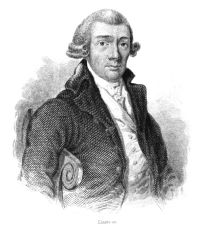 Dru Drury,
Illustrations of Exotic Entomology
Dru Drury,
Illustrations of Exotic Entomology
“ Reaumur has found that the moth, which feeds on clothes, refines the colour with which they are dyed in a wonderful manner; for the excrement of the animal is the colour of the cloth on which it is fed; and therefore, for miniature paintings, infinitely surpasses all others. ”
Gene Stratton-Porter,
Moths of the Limberlost: A Book About Limberlost Cabin
“ Some fly in the morning, others in the glare of noon, more in the evening, and the most important class of big, exquisitely lovely ones only at night. This explains why so many people never have seen them, and it is a great pity, for the nocturnal, non-feeding moths are birdlike in size, flower-like in rare and complicated colouring, and of downy, silent wing. ”
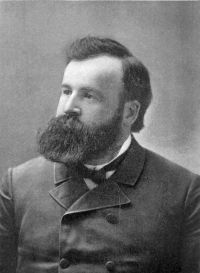 W. Hamilton Gibson,
My Studio Neighbors
W. Hamilton Gibson,
My Studio Neighbors
“ The existence of an orchid with a slender nectary eleven inches in length, and with nectar secreted at its tip, is a conclusive demonstration of the existence of a moth with a tongue eleven inches in length, even though no such moth is known. ”
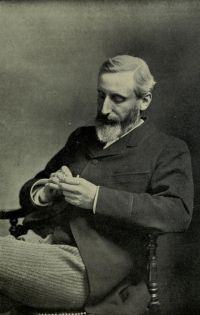 Grant Allen,
The Evolutionist at Large
Grant Allen,
The Evolutionist at Large
“ Thus the moths, which fly by night and visit only white flowers whose corollas still shine out in the twilight, are so irresistibly led on by the external stimulus of light from a candle falling upon their eyes that they cannot choose but move their wings rapidly in that direction ”
Gene Stratton-Porter,
Moths of the Limberlost: A Book About Limberlost Cabin
“ Repeatedly, I have gone through the entire life process, from mating newly emerged moths, the egg period, caterpillar life, with its complicated moults and changes, the spinning of the cocoons, the miraculous winter sleep, to the spring appearance ”
Gene Stratton-Porter,
Moths of the Limberlost: A Book About Limberlost Cabin
“ I do not pretend to; but that there was odour distilled by that one female, practically imperceptible to us (she merely smelled like a moth) , yet of such strength as to penetrate screen, vines, and roses and reach her kind a block away, against considerable breeze, I never shall believe.The fact is, that moths smell like other moths of the same species, and within a reasonable radius they undoubtedly attract each other. In the same manner birds carry a birdlike odour, and snakes, frogs, fish, bees, and all animals have a scent peculiar to themselves. ”
Robert Lynd, The Pleasures of Ignorance
“ But the average man does not even know by name such varieties as the Camberwell Beauty, the Dingy Skipper, the Pearl-bordered Fritillary, and the White-letter Hairstreak. As for the moth, are there not as many sorts of moths as there are words in a dictionary? Many men give all the pleasant hours of their lives to learning how to know the difference between one of them and another. One used to see these moth-hunters on windless nights in a Hampstead lane pursuing their quarry fantastically with nets in the light of the lamps. In pursuing moths, they pursue knowledge. ”
Richard South, The Moths of the British Isles… (1920)
“ The moth is on the wing in July and August, but it is rarely seen in the daytime, and not often at night, except when attracted by light into the house, or to the gas or electric lamps. It is exceedingly easy to rear, either from eggs or from collected caterpillars ”
Theodore Wood, Butterflies and Moths, Shown to the Children (1909)
“ Well, just look at their feelers or “antennæ,” as they are often called. You will see that those of butterflies are thickened at the very tips, while those of moths are not. Besides this, the body of a butterfly is nipped in at the middle much more than that of a moth. And when a butterfly is at rest it always folds its wings together over its back, while moths nearly always spread them out, or allow them to hang down, or wrap them round their bodies. ”
Jean-Henri Fabre,
Insect Adventures
“ By that time the soil is hard, having been beaten down by the rain and baked by the sun. Never could a Moth break her way through unless she had tools for the purpose and were dressed with great simplicity. ”
Francis A. Knight, In the West Country
“ Some moths, too, are abroad, even at this hour and in this fierce sunshine—moths clad in the very softest tints, the most ethereal tones of fawn and grey, of brown and yellow. Some are without a mark on their pure colouring, and some are daintily pencilled with shell-like lines and bars. ”
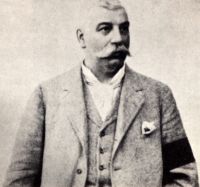 Augustus Radcliffe Grote,
Popular Science Monthly
(1885)
Augustus Radcliffe Grote,
Popular Science Monthly
(1885)
“ While certain flies reproduce by a sort of budding in the larval state, our moths, so far as known, all come from eggs laid by the female moth on leaves, flowers, or the branches and trunks of trees. Some are inserted in crevices of the wood itself, and the little caterpillars, when they hatch, bore into the heart of the tree upon which they feed. ”
Anna Chapin Ray, Half a dozen boys (1895)
“ They are the prettiest of all the insects, and there are a great many kinds of them, but they all go in two classes: the butterflies, that fly in the daytime; and the moths, that come out at night. You can tell the difference when they settle, too, for the butterflies fold up their wings till they meet, straight up over their backs, and the moth’s wings lie flat. ”