“ Only, the social groups that had filled it every summer were not there. But there was the Greek boy, in the garden, and Miss Stone, and Philip Harris whirring out at night and sitting on the terrace in the dusk, the light of his cigar glimmering a little, as he watched the Greek boy flung on the ground at his feet, his eyes playing with the stars. He knew them all by name under the skies of Greece. Achilles had taught them to him; and he counted them, like a flock, as he lay on the terrace—rolling out the great Greek names while they girdled the sky above him in a kind of homely chant. ”
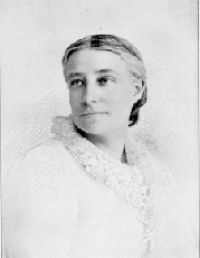
Jennette Lee
Biographical details
Jennette Barbour Perry Lee (1860–1951) was an American writer and academic celebrated for her novels and critical analyses grounded in New England culture and social dynamics. A productive author and educator, she taught English at esteemed institutions including Vassar College and Smith College, while her literary works examined themes of moral development, immigrant identity, and the tension between practicality and idealism. Notable novels such as Kate Wetherill: An Earth Comedy and Mr.
Achilles—the first American novel to focus on a Greek immigrant protagonist—reflect her refined engagement with human struggle and societal transformation. Her critical study The Ibsen Secret further highlighted her intellectual depth, connecting Ibsen’s symbolism to wider literary traditions. Lee’s body of work, merging regional realism with philosophical exploration, remains a tribute to her dual legacy as scholar and storyteller.
Quotes by Jennette Lee
Jennette Lee,
The Housetop Room
(1910)
“ At the other end of the room, between the two curving windows, a fire was burning in the great fireplace; and on the side of the room, through white-panelled, open doors, he caught glimpses into little sloping rooms beyond, with small-paned windows and half-drawn curtains and subdued color and light; and in one of the rooms, on a mahogany table, a brass dish of fruit-plums and oranges and grapefruit and hothouse melons and pears, the colors of the fruit and the yellow dish glowing dully in the shining wood of the table—a bit of Dutch interior—like a picture that grows real as one looks at it. ”
Jennette Lee,
The Return of Eric Bancroft
(1908)
“ The June light was everywhere—the sounds of birds in the shrubbery outside—the breath of summer. Norman Byers drank it in with thankful heart. He had come early to the church and was waiting in the vestry-room by the open window. The sound of little birds filled him and the clear fragrance of the light outside fell around him. He had wakened with a sense of lightness, and the light had deepened as his thought had gone swiftly back over the night—the meeting in the vestry—the strange, quick turn—Eric's face—and the eager whisper—close to his, and the sudden sense of love and acceptance. ”
Jennette Lee,
Unfinished Portraits: Stories of Musicians and Artists
“ Unrest—unrest—will it never cease? Shall I lie quiet? There will be Polish earth upon me. The silver goblet holds it. It is here beside me now. I reach and touch it with my hand. Dear land of music and the soul! The silver cupful from thy teeming fields is always near. It shall spill upon my breast—upon this racked and breathless burden! But the heart within that beats and burns—it shall be severed, chord by chord—it shall return to the land that gave it. Dear Poland! I see thee in the mists—with my mother's brow and mouth and chin. ”
Jennette Lee,
The Green Jacket — Chapter XXII
(1917)
“ But through it, in the shadowy room, the figure of the man could be seen plainly as he moved toward the fire with the deft movement that had the ease and swiftness of habit. . . . Quietly he seated himself and held out his hands to the glowing flames. The hands seemed to tremble, as if he shivered with cold, and the jewels gleamed and shimmered in his fingers. The firelight that touched them lighted up the face bent over them. It was full of sadness, and yet as if held by the charm of the green fire that darted and shimmered in the stones as he turned the necklace slowly in his fingers. ”
“ His soul had gone out to them and, musing in sunny Athens, he had made ready for them. Each morning when he rose he had lifted his glance to the Parthenon, studying anew the straight lines—that were yet not straight—the mysterious, dismantled beauty, the mighty lift of its presence. When they should question him, in this new land, he must not fail them. They would be hungry for the beauty of the ancient world—they who had no ruins of their own. He knew in his heart how it would be with them—the homesickness for the East—all its wonder and its mystery. ”
Jennette Lee,
The Chinese Coat
“ The earth and the grass on either side the path were very dark and moist—as if they had been dipped in some curious fluid, and the sky had a kind of luminous quality—swelling with fulness and a freshness of light. Richard More looked up at it and drew in a deep breath—and with the intake he understood, for the first time, that all men see the earth new-washed one morning in their lives. He had a sense of kinship with the earth and with every one living on the earth. ”
Jennette Lee,
A Little Dunker
(1906)
“ Far across the level stretch a meadow-lark called low—like spring—and sweet. She lifted her head to listen. Then she followed the sound, the red cow going before her. She would never quite reach the lark, she knew, for always as she came he lifted wing, but she followed, trusting. She loved the high, sweet note coming across the grass; and when it sounded like this, an echo of spring in it, it floated to the clouds and rested there. All the songs of all the larks were there, and when the Dunker raised her face she heard them calling clear—on the south wind they came—calling "Ma-ree—Ma-ree!" ”
Jennette Lee,
A Failure
(1907)
“ As she bent over the flowering things, the lines of her figure, supple and strong, and her face full of clear light, shed a girlishness about her. There was a kind of lightness in it—something set apart, untouched, rarely seen in a woman whose life has been lived. Only the line of the mouth contradicted the clear face and the eyes. As the blunt-pointed scissors came together on the heavy stems the line of the mouth deepened a little, each time, to a kind of firmness—edged with hardness. ”
Jennette Lee,
John Fairchild's Mirror
(1907)
“ The table seemed to emerge from its shapelessness and and babble. All about it surged the chaotic murmur and push of voices and the sound of dishes. It was hardly possible to talk, to think. Three times a day, seven times a week, one must give oneself in the breaking of bread with them. After dinner, when in the quiet of her room she drew forward a round table to the fire and arranged the drop-light, with books at hand, and settled comfortably into her deep chair before the fire, the noise and clamor of college life seemed shut away. ”
Jennette Lee,
At the End of the Rainbow
(1915)
“ Then the man leaped down and trod it with heavy, cautious feet. The thunder grew louder and the lightning broke through upon the great figure treading the earth. He flung aside the shovel and dropped to his hands and knees, scraping the earth out of the grass and moss in swift handfuls and throwing it loosely on top of the hole. The lightning playing across the sky flickered on the dry grass and moss and over the great trees and bleak cliff and the figure in its clumsy garment, half cape, half coat, crawling about the hole like some huge insect surprised at its work. ”
Jennette Lee,
The Green Jacket — Chapter X
(1917)
“ As if the closing of the muffled door had been a signal, the whole house woke to life. Somewhere at the rear an echoing door slammed, swift feet hurried along the corridors, voices came from the outer yard and the garage, and presently the low notes of a Chinese gong sounded through the house, wooing the silence with long, pulsing roll, and a black dress was seen descending the stairs. A minute later, the tall, thin figure of a man hurried quickly down. The unrest settled to silence, and Milly's needles held it and went back and forth and knit it into the green wool. ”
Jennette Lee,
A Girl of the Gray Sea
(1908)
“ She watched the cook hurry away to meet the fog. It swallowed the hurrying figure and came nearer, drifting along the beach. The girl stood with clasped hands, looking into it, her blue eyes deadened to its tone. The children ran past her, leaping and shouting. They emerged out of the grayness with soft touch, and vanished into it again. Across the harbor the fog-horn sounded its note—a long gray sound that neither rose nor fell; the voice of the fog—without question or answer—out of the eternal gray. ”
Jennette Lee,
The Return of Eric Bancroft
(1908)
“ He had come to rest in it, as he fought—as he rested in the music that filled the church—each day a fight—the living breath of men and women—and under all the sound of triumph, a mighty song that rose and filled the heavens—so that no man might despair, neither should any stay his hand. His soul was full of the joy of it—and the mystery—as he held the cup high in the light, repeating the solemn words. The priest without, speaking to the man within, pardon and brotherhood and love ”
Jennette Lee,
The Green Jacket — Chapter I
(1917)
“ She straightened the shade and returned the duster and paper cuffs to the closet, and seated herself by the desk, arranging the ink-stand and pens, erasers and pencils in exact order. All her movements were deft and precise and still—hardly more than a passing of grayness. Yet there was nothing ethereal about her. She was plump and healthy, and a little stout. In her gray eye there was a look of keenness as it glanced around the spotless office. An artist might have liked to paint her as she sat beside her desk—so perfect was the setting of the room for her personality. ”
Jennette Lee,
A Failure
(1907)
“ A flitting paleness had crossed the lips. "It is to- night?" The words were almost a whisper. But the color had come back to her face."Would you like me to stay?" answered the doctor."No—no. You could not help?" quickly."Only to be here.""No, do not stay." She laid her hand on his arm, motioning him toward the door. "Do not stay. I think I would rather be alone."Slowly the night wore itself out. The long minutes shaped themselves, out of time, and laid themselves on her heart, with their burden of mystery and light. ... Now she had missed it all—the meaning of it! Life was love—and love. ”
Jennette Lee,
The Scientist and the Moth
(1905)
“ Henrietta's face grew stern. "I'd never do it," she exclaimed, "not if I were a grown man." "You don't suppose they feel it, Henrietta?" Ethelberta's voice was slow and gentle. "Of course they feel it," snapped Henrietta. "Would n't you?" "Oh, but that's different, dear." "It's just the same," declared Henrietta. There was a little catch in her voice. "Excuse me, please, mother." She slipped from the table, and they smiled at each other indulgently. "She's such a child," said Mrs. Tryon. "And she thinks you spear them alive," explained Ethelberta. ”
Jennette Lee,
Miss Cynthia's Rosebush
(1916)
“ His voice was gentle and very happy, and Hudson Bowley knew that life had not passed him by. He would be as other men—as Jim and Mary! And he saw them with the worn light of happiness in their faces—and Lydia's small round head and red cheeks and the two straight braids of hair—and he saw all children in their love and helplessness. He was holding Cynthia close. ”
“ Greek youth and maid in swiftest play. They flung the branches wide and trembled in the voiceless light that played upon the grass. The foot of Achilles half-beat the time. The tones filled themselves and lifted, slowly, surely. The voice quickened—it ran with faster notes, as one who tells some eager tale. Then it swung in cradling-song the twilight of Athens—and the little birds sang low, twittering underneath the leaves—in softest garb—at last—rose leaves falling—the dusky bats around her roof-tops, and the high-soaring sky that arches all—mysterious and deep. ”
Jennette Lee,
The Green Jacket — Chapter XVII
(1917)
“ A phalanx of men in orderly rank was moving along the paths and borders, weeding and hoeing and pruning—the scissors and hoes and trowels and rakes flicked in the light with a little, irregular tattoo of sound, and the bent backs of the men had an intent, absorbed look. When she descended the stairs a battle and bustle of eagerness pervaded the house. Batson was everywhere, urging and directing his forces with solicitous presence.To Milly the house and grounds had seemed in perfect condition the day before. But out of this movement and stir of preparation something new seemed to emerge. ”
Jennette Lee,
The Serenade
(1914)
“ The music trembled a moment and was still; then the passion burst in a flood upon them. Dark chasms opened; strange, wild fastnesses shut them in; storm and license and evil held them. Blinding flashes fell on them. Slowly the player emerged into a wide sunlit place. The music filled it. Winds blew from the four quarters to meet it, and the air was full of melody. The count stirred a little as the last notes fell. ”
“ Aunt Jane's glance rested on them and she smiled. "Dreading it?" she asked.The lips moistened themselves and smiled back. "A little," said the woman.Aunt Jane's face grew kinder and rounder and beamed on her; and the woman's eyes rested on it."You never had one, did you?" said Aunt Jane.The woman shook her head."I thought likely not. Folks don't generally dread things that they've had—not so much as they do those they don't know anything about.... You won't dread it next time!" She said the words with a slow, encouraging smile. ”
Jennette Lee,
John Fairchild's Mirror
(1907)
“ It was the rare comradeship that seems to exist only where men or women are sequestered for some chosen aim. And this, too, was a perfect thing of its kind. No more beautiful friendship could be imagined than these young girls gave to Gabrielle Eaton. To enter into this companionship, to understand it and be renewed by it, was her life, as narrow as in the face under the walls of her room, but as fresh and springing as youth itself. ”
Jennette Lee,
Unfinished Portraits: Stories of Musicians and Artists
“ In another minute the Herr Professor Doctor Holtzenschuer was driving rapidly through the streets of Munich, on the outside of a common hack, a clumsy parcel balanced awkwardly on his stiff shoulders.From the windows below, on either side, a face looked out upon the flying streets—a fairy with gentle eyes and a crone with toothless smile."The Pinakothek!" grumbled the old woman. "Does he think any one at the Pinakothek knows more of Albrecht Dürer than Henriette von Herkomer?" She sniffed a little and drew her folds about her. ”
Jennette Lee,
Uncle William: The Man Who Was Shif'less
“ They were all alike—exorbitant cab-men, who came down on their fare if you stood by your box and refused to let it be lifted till terms were made; rum-shops and gambling-holes, and worse, hedging the way from the wharf; soiled women haunting one’s steps, if one halted a bit or turned to the right or left in indecision. He had talked with women of every port. They were a huge band, a great sisterhood that reached thin hands about the earth, touching it with shame; and they congregated most where the rivers empty their burden of filth into the sea. Uncle William knew them well. ”
Jennette Lee,
The Green Jacket — Chapter XV
(1917)
“ My husband shut himself alone—in his room. All day I did not see him. Stephen had gone with Marian into town to see her off, and I was alone." She shuddered a little. "I had never been alone in my life. I do not mean physically alone, you understand—but in my heart. There had always been my mother—and then Oswald. But that day there was no one in the world. I thought my heart would break!" She looked at Milly and there was a strange passion in her eyes, as if the memory of the day haunted them. "I know they say hearts do not break," she said. ”
Jennette Lee,
The Green Jacket — Chapter XXI
(1917)
“ The girl was not only in love with him—that had been obvious to her from the first—but she was infinitely sorry for the man whom her eyes followed with a look of deep pity. The girl knew everything! Milly's needles passed with swift stitches through the green wool, drawing it up, transforming it into shape and comeliness. Almost of themselves the needles were weaving for her a story that stretched away to the future—for the man and girl. . . . With his mother's cordial aid and the look in the girl's eyes, one did not need to guess what time would bring to Stephen Mason. ”
Jennette Lee,
The Green Jacket — Chapter XXII
(1917)
“ He sank back in his chair, as if watching the illusion—as if its very evanescence were precious to him. "I did not dream then that anything could ever touch the security of my pride in her—that utter possession of her soul that knew her mine!" His voice sank to a low note. He roused himself. "I do not need to go over it—the happiness we lived; her beauty and her sweetness. It is all bound up in this—it all comes back to this at last!" He shook the necklace lightly in his hand and the stones shimmered in his trembling touch. "Until two years ago there was not a cloud in our life. . . . ”
Jennette Lee,
At the End of the Rainbow
(1915)
“ In a fitful flutter of lightning the Island stretched away, its dry grass and gaunt trees and half-shrubs leaping in a kind of sinister dance in the flickering light. Then darkness, and the muttered thunder rolling from the east—and the man bent again to his work, shovelling earth into the half-filled hole with grotesque, leaping haste. The moon that had glimmered faintly when the work began had disappeared; but the rhythmic throw of the shovel sent each shovelful skilfully to place till it lay heaped in the hole. ”
Jennette Lee,
A Failure
(1907)
“ He had not believed that they could live together in harmony a single year; and lie had watched with puzzled eyes the transformation of the man, the serene, untroubled life of the woman. Of late years he had given over thinking of it. He himself had married. He had plenty of problems of his own, and children. But this morning as he sat in the home-like room, asking the crisp, legal questions and writing swiftly, it all came back to him with puzzling freshness. The intervening years were wiped away as he looked into John Melvin's face—weak and old, with something of the boy in it. ”
“ Only for a moment the dark face clouded. Then the smile flooded again. He should find her. It might be hard—but he would search. Had he not come down the long way of the Piraeus to the sea—blue in the sun. Across the great waters by ship, and the long miles by train. He should find her.... They would talk again. He laughed quietly in the dusky shop. Then his eye fell upon it—the music roll that had slipped quietly to the floor when her eager hand had lifted itself to touch the butterfly, opening and closing his great wings in the fig-box. ”
Jennette Lee,
Unfinished Portraits: Stories of Musicians and Artists
“ He held up his hand, moving the supple fingers with a little gesture of pride. "Isn't it?" he demanded, smiling.The young man shook his head. His round face retained its look of dissent. "Marriage—for a man like you! Two hundred florins—for dowry!" He laughed scornfully.His companion's face flushed. A swift look came into the eyes.The other held out a deprecating hand. "I didn't mean it," he said. "Don't be angry."The flush faded. The artist turned to the easel, taking up a brush, as if to seek in work a vent for his disturbed thought."You'll spoil it!" said Pirkheimer quickly. ”
“ They would not return until night, and then they would come with empty carts, and jingling in their pockets coppers and nickels and dimes. The breath of a sigh escaped Achilles’s lips as he stood back surveying the stall. Something very like homesickness was in his heart. He had almost fancied for a minute that he was back once more in Athens. He raised his eyes and gave a quick, deep glance up and down the street—soot and dirt and grime, frowning buildings and ugly lines, and overhead a meagre strip of sky. Over Athens the sky hung glorious, a curve of light from side to side. ”
Jennette Lee,
Unfinished Portraits: Stories of Musicians and Artists
“ There was the same delicate modelling of lines, the same breadth between the eyes, the long, flowing locks, the full, sensitive lips, and in the eyes the same look of deep melancholy—touched with a subtle, changing, human smile that drew the beholder. It disarmed criticism and provoked it. Except for the halo of mocking and piercing thorns, the living face might have been the pictured one below it. The look of suffering in one was shadowed in the other. ”
“ The thin face on the pillow, with the hair drawn tightly back and braided in its two small braids, had somehow a heroic look. There were lines of suffering on the forehead, but the mouth had a touch of something like courage, even in its sleep—as if it would smile, when the next hard thing was over.Aunt Jane, who had come in silently and stood looking down at it, called it "the woman look.""They always have it," she sometimes said—"the real ones have it—kind of as if they knew things would come better—if just they could hold on—not give up, or make a fuss or anything—just hold on!" ”