
“ They were sewing at machines, and at hand-work, but not as women are accustomed to sew, with leisurely stitches, stopping to pat a seam here, to run a calculating eye along hem or ruffle. It was a dreadful, mechanical motion, that sewing, a machine-like, relentless motion, with no waste in it, no pause. ”
Sewing
Definition and stakes
Sewing, the art of joining fabrics with a needle and thread, dates back to the Paleolithic era, evolving from hand-stitched garments to industrial production. While 19th-century machines revolutionized large-scale manufacturing, hand-sewing continues to play a role in haute couture and artistic expression. Authors like Edna Ferber portrayed the mechanized, unrelenting rhythm of factory work, contrasting with Isabel De Nyse Conover’s appreciation of making baby clothes as a gentle, creative endeavor.
Others, such as Harriet Beecher Stowe, emphasized the demanding nature of the craft for women juggling family responsibilities and income. Today, sewing connects historical tradition with contemporary hobbyism, as seen in programs like The Great British Sewing Bee, reflecting its lasting cultural and practical significance.
Quotes about “sewing”
Isabel De Nyse Conover, A Complete Course in Dressmaking (1922)
“ The most delightful of all sewing is the making of these wee garments for an infant. Aside from the tender, loving thoughts sewn into each tiny article, there is the pleasure of feeling the softness of the goods and the daintiness of the texture. ”
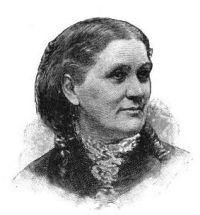 Lucy Larcom,
A New England Girlhood, Outlined from Memory…
Lucy Larcom,
A New England Girlhood, Outlined from Memory…
“ Every kind of work brings its own compensations and attractions. I really began to like plain sewing; I enjoyed sitting down for a whole afternoon of it, fingers flying and thoughts flying faster still,—the motion of the hands seeming to set the mind astir. ”
Mabell S. C. Smith, Ethel Morton at Chautauqua
“ But the sewing that is worth while cultivating now is the kind that can't be done by the machine but by the fingers of an artist. Embroidery and specialized dressmaking like that we've been talking about—those are the kinds of sewing that make you a craftswoman and an artist and not a drudge.""You've stowed away all that your teacher has told you, I see." ”
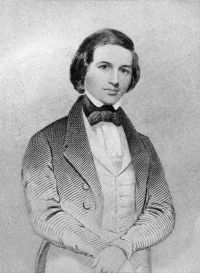 T. S. Arthur,
Woman's Trials; Or, Tales and Sketches from the Life around Us
T. S. Arthur,
Woman's Trials; Or, Tales and Sketches from the Life around Us
“ PLAIN SEWING; OR, HOW TO ENCOURAGE THE POOR. "Do you know of any poor body who does plain sewing?" asked Mrs. Lander of a neighbour upon whom she called for the particular purpose of making this inquiry. "I have a good deal of work that I want done, and I always like to give my plain sewing to people that need it." "I think I know of a person who will suit you," replied Mrs. Brandon, the lady to whom the application had been made. "She is a poor widow woman, with four children dependent upon her for support. She sews neatly. ”
 Harriet Beecher Stowe,
Little Foxes
(1865)
Harriet Beecher Stowe,
Little Foxes
(1865)
“ It makes beautiful sewing, to be sure; but when a woman has a family of little children and a small income, if all her sewing is to be kept up in this perfect style, she wears her life out in stitching. ”
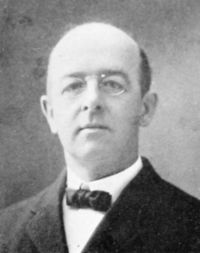 William John Hopkins,
The clammer
(1906)
William John Hopkins,
The clammer
(1906)
“ And, for a wonder, no friend was there, but Eve sat by the fire, too, a book in her hand and her sewing basket near. For Eve, not having been brought up to sew,—save embroidery, if that be called sewing,—has developed, suddenly, a great desire for it, so that she always has her basket by her. ”
 Lydia Maria Child,
The mother's book
(1846)
Lydia Maria Child,
The mother's book
(1846)
“ When sewing, you can call attention to the fact that sewing-silk splits much better for being first drawn through the wax; and that a wristband is put on before the sleeve is sewed, because it can be managed more conveniently. ”
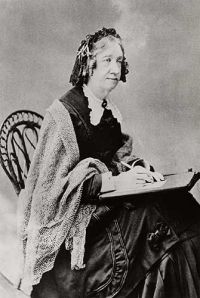 Catharine Esther Beecher,
Miss Beecher's Housekeeper and Healthkeeper
Catharine Esther Beecher,
Miss Beecher's Housekeeper and Healthkeeper
“ In the sewing department, a trunk, with suitable partitions, is provided, in which are placed, each in its proper place, white thread of all sizes, colored thread, yarns for mending, colored and black sewing-silks and twist, tapes and bobbins of all sizes, white and colored welting-cords, silk braids and cords, needles of all sizes, papers of pins, remnants of linen and colored cambric, a supply of all kinds of buttons used in the family, black and white hooks and eyes, a yard-measure, and all the patterns used in cutting and fitting. ”
Walter Sutherland Parker, 1911 Encyclopædia Britannica (1911)
“ Although the sewing, which is necessarily done by hand, the sections being of so unequal and tortuous a character, is rather roughly executed, the matching of colours and qualities is excellent. The enormous quantities of pieces admit of good selection and where odd colours prevail in a lining it is dyed. ”
Anna M. Cooley, Clothing and Health: An Elementary Textbook of Home Making
“ We shall sew ours by machine. The French seam is used on some garments made by hand. The first sewing (Fig. 54) , then, is a tiny row of running stitches, close to the basting. After the first sewing, the basting should be removed and the edges trimmed to a 1⁄8 inch seam. This must be done carefully. Then, turn the garment to the wrong side. Press and pinch the seams evenly so that the sewing of [88] the seam is exactly on top of the fold as you pinch it. Next, baste again 1⁄4 inch from edge, and sew the second time, by machine. This seam is often used on dainty handmade underwear. ”
Various, The American Missionary — Volume 35…
“ Sewing, in which they are woefully deficient, receives due attention, and girls whose hands can manage a plough or a cotton bag much more easily than they can [11] hold a needle, become at the end of the course very nice seamstresses, whose work would rejoice the hearts of the advocates of hand sewing. ”
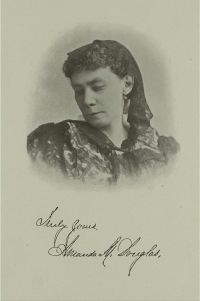 Amanda M. Douglas,
A Little Girl in Old New York
Amanda M. Douglas,
A Little Girl in Old New York
“ When you consider that sewing-machines had not been invented, it was a wonder how the women accomplished so much. But they always had some "catch-work" handy. The little girl was provided with a pretty work-basket, six spools of cotton, a pincushion, a needle-book, a bit of white wax, and an emery, which was a strawberry-shaped cushion topped off with some soft green stuff she knew afterward was chenille. ”
1911 Encyclopædia Britannica, Volume 12… (1911)
“ When hand sewing is employed the pieces to be sewn together are placed between a pair of jaws, the holding edges of which are serrated with fine saw-teeth, and the sewer by passing the needle forwards and backwards between each of these teeth secures neat uniform stitching. ”
Martha McCulloch-Williams, Harper's Household Handbook: A guide to easy ways of doing woman's work
“ Fit into the hole, tack lightly in four places, turn, sew the cut edges together, taking stitches close and barely deep enough to hold. Turn every little while, smooth seam, and look for puckers; if any rip, sew over. Sewing done, press seam hard with the thimble on something flat, then turn and press on right side with the end of the thumb. Manipulate until the skin edges lie one against the other. Fur garments can be remodeled at home with just such sewing. ”
William Deskitt Foot Vincent, The cutters' practical guide to the cutting of ladies' garments (1892)
“ There are several methods of getting the patterns to match in the sewing, but one of the best and surest we have seen, is to turn in the back just to the mark, and then lay it on the top of the sidebody, and so get it to exactly match every bar and cross bar, and when in that position, fell baste it from the outside, which will then leave a row of straight stitches on the wrong side, and which will clearly indicate the place where the seam must be sewn. ”
Isabel De Nyse Conover, A Complete Course in Dressmaking (1922)
“ You will see how to apply this material when you take up blouses, dresses, pattern making and draping. Lesson II shows the first steps in applying quick and efficient methods to sewing. It takes up the making of aprons and housedresses just to demonstrate several points in sewing. ”
“ If the book is to have a binding with raised bands across the back, no actual cuts are made, the back being simply scratched to guide the girl in sewing, so that the heavy twine on which she sews will stand out on the back, forcing the leather up in the five middle places and forming the raised bands. ”
Cheshire Lowton Boone, The Library of Work and Play: Guide and Index
“ But sewing, valuable as it is in connection with the young girl's problems, is not the only craft at hand. In recent years craftworkers have revived a number of old methods of using or preparing textiles for decorative purposes, and some of these have proven increasingly worth while in the household. ”
 Harriet Martineau,
Once a Week
(1863)
Harriet Martineau,
Once a Week
(1863)
“ Each person had so few garments, and they were so seldom renewed, that the amount of sewing in a household was no more than could be easily managed at home,—however exquisite and time-consuming might be the stitching, and marking, and buttonholeing, and all the rest of it. ”
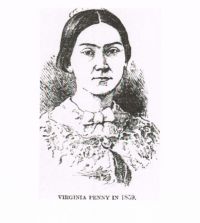 Virginia Penny,
The Employments of Women: A Cyclopædia of Woman's Work
Virginia Penny,
The Employments of Women: A Cyclopædia of Woman's Work
“ They make up a great many lace and damask curtains, and are under the supervision of a forewoman. Seventeen sewing machines are kept, though most of the sewing is done by hand. Any person that can sew well can do all the work, as it is cut out and prepared. ”
May Kellogg Sullivan, A Woman who went to Alaska
“ A regular workshop it is. Boxes of thread, beads, scraps of fur, whole otter skins, paper patterns, shears, bits of hair and fur scattered upon the floor, and the walls covered with hanging fur garments; this is the sewing-room of the captain's wife as it is now each day when I go there. The room contains two large windows, one on the north side and one on the west, at which hang calico curtains tied back with blue ribbons in daytime. These women work very rapidly, with the thimble upon the first finger and by pushing the three-cornered skin needle deftly through skins they are sewing. ”
Effie Archer Archer, The Library of Work and Play: Needlecraft
“ Now I know you want to do some real sewing; it must not be big or you will get very tired and think sewing is not as pleasant as you fancied. The simplest stitch in sewing is basting. This is used to hold materials together until you are ready to make [7] firmer stitches. In the following illustration the even and uneven basting stitches are shown (Figures 4 and 5) . They must be straight. Even basting stitches should be taken about a quarter of an inch apart and in the running stitch which is fine basting about an eighth or a sixteenth of an inch. ”
Harry Inwards, Straw Hats: Their history and manufacture
“ A process common to both hand and machine sewing is the “milling” of plait before using. This obtains mainly, if not wholly, on plaits made of straw. In hand sewing times it was an absolute necessity, as it imparted a requisite pliability to the somewhat harsh fibres, and permitted their easier adjustment in sewing to the requirements of the shape. ”
James B. Nicholson, A Manual of the Art of Bookbinding
“ After the sewing-press is properly regulated and the end-paper sewn as previously described, the sheets should then be taken, one at a time, in their regular order, and sewn all along, from one end of the sheet to the other, or, more properly, from one kettle-stitch to the other, taking especial pains to observe that in sewing each sheet, after the first kettle-stitch has been caught, the needle must be passed to the farthest side of the nearest band, then passed to the other side of the band, and so on for each successive band. ”
Jane Eayre Fryer, The Mary Frances Sewing Book; Or…
“ Point needle downward through hole to the right of hole from which the cotton hangs; under three threads: pull through.4. Repeat to end of row. Fasten.”“There!” said Mary Frances, finishing the row. “That seems like ‘two steps backward and one forward,’ or rather, ‘two forward and one backward.’”“That’s about the way it is!” said Sewing Bird. “But half back-stitching and back-stitching are both very strong stitches. Why, when your grandma was little, she stitched all seams by hand. Sewing machines were a great cu-cur―”“Curiosity,” smiled Mary Frances. ”
Theta Johnson, It's Fun to Sew a Cotton School Dress
“ This project is for you who have learned the lessons of Clothing Phases 1 and 2. You are now ready to do more advanced sewing.Third phase clothing features clothing for school and play. It includes points on health and good grooming for you to study and use. You will learn to stretch the life of your clothes. Take turns leading discussions and giving demonstrations for your club. Look at “Tips for Easier Sewing,” page 13. They will aid you in improving your sewing.What to study 1. Care of clothing—learn to keep your clothing in its proper place. 2. Buying anklets and how to care for them. ”
Theta Johnson, It's Fun to Sew a Cotton School Dress
“ Stay-stitch around all the bias and curved edges as soon as you remove the pattern.Remember to press as you sew. Press each seam as it is made. Pressing makes sewing easier and improves the looks of your dress.Hem your dress on the sewing machine if it has a full gathered skirt or by hand on flared or straight skirts or on plain colored fabric. ”
 Elizabeth Cleghorn Gaskell,
Round the Sofa
Elizabeth Cleghorn Gaskell,
Round the Sofa
“ We worked under her during a great part of the day, either in the still-room, or at our sewing in a chamber that opened out of the great hall. My lady despised every kind of work that would now be called Fancy-work. She considered that the use of coloured threads or worsted was only fit to amuse children; but that grown women ought not to be taken with mere blues and reds, but to restrict their pleasure in sewing to making small and delicate stitches. ”
Anna M. Cooley, Clothing and Health: An Elementary Textbook of Home Making
“ We shall learn how to sew on the lace insertion or edging. The girls who use lace may decide to have only the edging. If insertion or beading is used, too, it is sewed on first.While we are waiting for the lace to come, we can prepare the edges of the neck and sleeves. If we use a French fell, the sewing will not show on the right side at all when the lace is entirely in place; besides, only one sewing is necessary for the hem and lace. This is how it is done ”
Edwin Creer, Board-Work; or the Art of Wig-making…
“ Commence sewing up as before, and when the two rows are done, instead of turning the weft backwards and forwards so as to show the work, turn it round and round in order to conceal it, still sewing-up flat as previously described.Tufts of hair are side pieces or curls, and the weft is wound round a side comb instead of being sewn upon it, as will presently be mentioned. The word “tuft” may be applied to almost any small piece of postiche hair, whether it be upon a 68comb or a hair-pin, as “pin-curls” are made. ”
William Deskitt Foot Vincent, The cutters' practical guide to the cutting of ladies' garments (1892)
“ The system is as follows:—W D half neck, D F, 1 inch, draw curve of sewing on edge from W to F, W to V and F to 1⁄2 is the stand, below which, as from V to I, is the fall. In making, the sewing to edge must be well stretched in the hollow. In style this much resembles the Panteen Collar, but is not so deep in the stand at front, and is cut all in one piece, though it is nothing unusual to find the under collar arranged with the stand and fall cut separate. ”
“ A sewing needle, rather finer than the loop through which it has to pass, smooth darning, or, still better, embroidery cotton, wool or silk matching to a shade, a wooden or indiarubber ball, and a piece of stiff brown paper or toile cirée. ”
Jane Eayre Fryer, The Mary Frances Sewing Book; Or…
“ Fasten thread by several small stitches.NOTE.―If thread is too short to finish button-holing, fasten it on wrong side of material. Enter the new thread on wrong side and bring thread through last button-hole purl, or twisted edge.Aunt Maria gave Mary Frances these directions very slowly, making the little girl do each step as she explained. [Pg 169] “My,that’s thehardestthing yet”“No, not that way, child,” she would say. “Sit up straight; place both feet firmly on the floor; hold your sewing high; do not stoop over. That is the correct position while sewing. ”
Sir William Edward Parry, Journal of the Third Voyage for the Discovery of a North-West Passage
“ In some of the few arts practised by the women there is much more dexterity displayed, particularly in that important branch of a housewife’s business, sewing, which even with their own clumsy needles of bone they perform with extraordinary neatness. ”
Sir William Edward Parry, Three Voyages for the Discovery of a Northwest Passage from the Atlantic to the Pacific…
“ This, together with any other articles of a similar kind, they keep in little bags, which are sometimes made of the skin of birds' feet, disposed with the claws downward in a very neat and tasteful manner. In sewing, the point of the needle is entered and drawn through in a direction towards the body, and not from it or towards one side, as with our seamstresses. ”
Theta Johnson, It's Fun to Sew Aprons and Skirts
“ Dampen a piece of cheesecloth and squeeze it tight. Do not make it wet. Place it over the cloth you want to press and set iron on it. Steam will form and dampen the cloth.Always iron or press with the grain of the cloth. Follow the warp or the filling threads. Do not iron on the bias.7 Sew—have funNow that you have practiced using the sewing machine, you are ready to make a scarf, slippers, or sewing kit.Make a scarfThis scarf may be made larger than the measurements suggested but it will require more fabric. ”
Theta Johnson, It's Fun to Sew a Cotton School Dress
“ Your seams will not hold if the stitch is not perfect. Try your machine stitch on a double piece of cloth. Stitch on the bias and the straight. Does the stitch look the same on both sides? If not, have your leader adjust the tension while you watch to see how she does it.For a review of what you learned about the sewing machine in your other projects, practice sewing on a sample of your fabric until you get the feel of the machine. When you can run the machine smoothly, make one of the following articles for practice—scarf, draw-string bag, apron, or swimming robe. ”
Related terms
Authors who wrote about “sewing”
Theta JohnsonJane Eayre FryerKate Heintz Watson Melusina Fay PeirceIsabel De Nyse ConoverButterick Pattern CompanyHarry Inwardsby Butterick Pattern CompanyVirginia PennyAmanda M. DouglasSir William Edward ParryEffie Archer ArcherCatharine Esther BeecherVariousAnna M. CooleyHarriet MartineauAnonymousWilliam Deskitt Foot VincentHarriet Beecher StoweWalter Sutherland Parker
Melusina Fay PeirceIsabel De Nyse ConoverButterick Pattern CompanyHarry Inwardsby Butterick Pattern CompanyVirginia PennyAmanda M. DouglasSir William Edward ParryEffie Archer ArcherCatharine Esther BeecherVariousAnna M. CooleyHarriet MartineauAnonymousWilliam Deskitt Foot VincentHarriet Beecher StoweWalter Sutherland Parker