“ And her grand-daughter Julie—just seven years old, Is learning already the bobbins to hold. Without drawings to follow, or patterns to trace, How can these poor cottagers fashion their lace? From the plant and the flower and unfolding fern And the frost on the pane their patterns they learn,— From gossamer web by the spider wove,— From natural taste and natural love For every form of beauty and grace, They've learned to fashion their wonderful lace. ”
Lace
Definition and stakes
Lace, a delicate fabric woven through intricate patterns, has long symbolized elegance and artistry. Authors such as Charlotte Kellogg examined its historical development, emphasizing its flourishing in Europe from the 16th to the 18th century, while Maria Margaret Pollen highlighted its variety of designs, noting its value as a "valuable encyclopædia of patterns.
" Mrs. Bury Palliser connected lace to cultural memory, describing its preservation in rural homes as a testament to past times. These perspectives together underscore lace as both a skilled craft and a medium for aesthetic and social storytelling.
Quotes about “lace”
 Mary Eleanor Wilkins Freeman,
Noblesse
(1913)
Mary Eleanor Wilkins Freeman,
Noblesse
(1913)
“ A real lace collar lay softly over her enormous, billowing shoulders; real lace ruffles lay over her great, shapeless hands. Her face, the delicacy of whose features was veiled with flesh, flushed and paled. Not even flesh could subdue the sad brilliancy of her dark-blue eyes, fixed inward upon her own sad state, unregardful of the company. ”
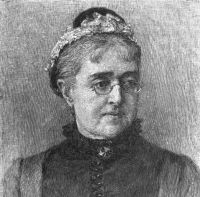 E. Lynn Linton,
The Girl of the Period, and Other Social Essays…
E. Lynn Linton,
The Girl of the Period, and Other Social Essays…
“ A length of lace unstarched, a ribbon unsewed, a flower set awry, anything that crumples one of the myriad rose-leaves on which she lies, and the spoilt woman raves as much as if each particular leaf had become suddenly a bunch of thorns. ”
 Susan Glaspell,
Lifted Masks; stories
Susan Glaspell,
Lifted Masks; stories
“ Now look here, Young Lady, I don't doubt but this lace is great stuff. You say so, and I haven't seen man, woman or child on this side of the Atlantic knows as much as you do. I'm mighty grateful for the lace—don't you forget that, but just the same—well, now I'll tell you. I have a very special reason for wanting something a little livelier than lace. ”
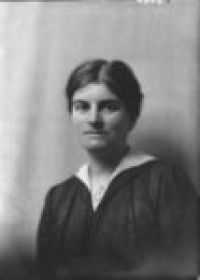 Charlotte Kellogg,
Bobbins of Belgium
Charlotte Kellogg,
Bobbins of Belgium
“ But interesting discoveries are rare, and the body of our knowledge of lace history so far is meager.However, we are interested primarily, not in the ancient origins of the two great lace groups, nor in early passementeries and filets and their processes, but in the [28] marvelous efflorescence of the lace art of the Western Europe of the 16th, 17th and 18th centuries, and in its still lovely expression of to-day. ”
Various, The Cumulative Book Review Digest…
“ The author “tells us in ‘The lace book’ in a concise form, all that is interesting in the history of the evolution and production of lace in the countries which have given the world the finest examples of this delicate fabric. This handsome volume is illustrated with engravings from famous pictures of distinguished personages, showing how lace was employed in costume at different times; well-chosen, full-size examples are also given of the various kinds of lace; and an index endows the collector and connoisseur with a book of reference.”—Nation. ”
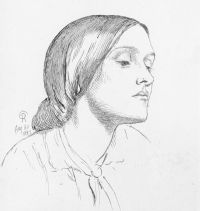 Maria Margaret Pollen,
Seven Centuries of Lace
Maria Margaret Pollen,
Seven Centuries of Lace
“ Whilst the majority of your photographs are from generally well-known varieties of lace, those from the earlier drawn thread-works and darning upon different makes of square mesh, net, or grounds of radiating, intertwisted threads, are particularly interesting—and the entire series, accompanied by your descriptions, forms a most valuable encyclopædia of designs and textures to be seen in laces and cognate fabrics. ”
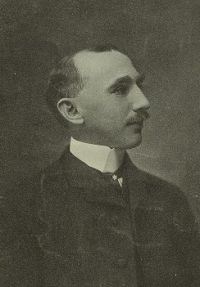 Madison Julius Cawein,
A Voice on the Wind, and Other Poems
Madison Julius Cawein,
A Voice on the Wind, and Other Poems
“ Her shawl, the lace-like elder bloom, She hangs upon the hillside brake, Smelling of warmth and of her breast's perfume, And, lying in the citron-colored gloom Beside the lilied lake, She stares the buds awake. [Pg 29] Or, with a smile, through watery deeps She leads the oaring turtle's legs; Or guides the crimson fish, that swims and sleeps, From pad to pad, from which the young frog leaps; And to its nest's green eggs The bird that pleads and begs. ”
Mrs. Bury Palliser, History of Lace
“ When the taste of the age again turned towards the rich fabrics of the preceding centuries, much lace, both black and white, was found in the country farm-houses, preserved as remembrances of deceased patrons by old family dependants. ”
Mrs. Bury Palliser, History of Lace
“ The newspapers crowd with losses of lace, and rarer—finds. [993] They give us, however, no clue to the home manufacture. "A pasteboard box full of laced linen, and a little portmanteau with some white and grey Bone lace," [994] would seem to signify a lace much made two hundred years ago, of which we have ourselves seen specimens from Dalecarlia, a sort of guipure, upon which the pattern is formed by the introduction of an unbleached thread, which comes out in full relief—a fancy more curious than pretty. ”
Mrs. Bury Palliser, History of Lace
“ Many will have seen the Russian towels in the International Exhibition of 1874, and have admired their quaint design and bright colours, with the curious line of red and blue thread running through the pattern of the lace. Darned netting and drawn-work appear, as elsewhere, to have been their earliest productions. ”
Maria Margaret Pollen,
Seven Centuries of Lace
“ No linen or netting [34] being used the worker had to construct her lace—in aria—out of nothing, and a splendid opening it gave, as we shall now see, for invention and for execution. This punto in aria, worked into points, was extensively used for personal adornment: these points gave the name of pizzi to lace, a name which still survives in Italy as comprehensive of all lace, as the name dentelle is in France. ”
Mrs. Bury Palliser, History of Lace
“ As early as the fifteenth century the countrywomen from the mountains of the Vélay would congregate together during the winter within the walls of the neighbouring cities, and there, forming themselves into companies, gain their subsistence by making coarse lace to ornament the albs of the priests, the rochets of the bishops, and the petticoats of ladies of quality. And very coarse and tasteless were these early products, to judge from the specimens which remain tacked on to faded altar-cloths, still to be met with in the province, a mixture of netting and darning without design. ”
Samuel L. Goldenberg, Lace, Its Origin and History (1904)
“ Machine-made lace may be predominantly the lace of commerce, but hand-made lace is the natural expression and embodiment of a delicate and difficult art, and thus it will ever remain.Insertion.—A kind of lace, embroidery or other trimming used to insert in a plain fabric for ornamental purposes. It is made with the edges on both sides alike, and often a plain portion of the material outside the work, so that it may be sewn on one side to the garment for which it is intended and to the plain part of the lace or border on the other. ”
Charlotte Kellogg,
Bobbins of Belgium
“ And it is only because those few who remain preserve the best traditions of the lace that they count in the lace-world of to-day; the quantity produced is negligible. Nevertheless, I was delighted that my first knowledge of Bruges lace should come through the few wide Valenciennes flounces of exquisite flower and vine pattern and firm and even workmanship that I found still pinned to the cushions of the Béguinage. ”
Maria Margaret Pollen,
Seven Centuries of Lace
“ Lace in pictures has, in the first place, been interpreted by the painter, and no pencil or brush can show more than the general effect. The stitches in the toilé, or ground of needle-point lace, amount sometimes to several thousand in every square inch; and the almost incredible fineness of the twists in the réseau of pillow laces makes identification very difficult, unless it is founded on observation of actual portions of the fabric. ”
Anne Knox Arthur, An embroidery book (1920)
“ But lace-making is not for the busy woman or householder, who has her day fully occupied, but rather for the few who possess skill, good patience, and many unoccupied hours—these must belong to the woman who would excel in the art of producing the delicate fabric. It is most interesting to trace the development of lace; how needle-weaving of the more simple, primitive type later became drawn-thread work or openwork, in which finer threads and materials were used ”
Mrs. Bury Palliser, History of Lace
“ The Republics of Central and South America show indications of lace-making, consisting chiefly of darned netting and drawn-work, the general characteristic of the lace of these countries. The lace-bordered handkerchiefs of Brazil, and the productions of Venezuela, with the borders of the linen trousers of the guachos, and the Creva lace of the blacks of the Province of Minas Geraes, are the finest specimens of drawn-work. The lace of Chili is of the old lozenge pattern, and men also appear to be employed on the work. ”
Emily Leigh Lowes, Chats on Old Lace and Needlework
“ Real Flanders lace thread even now, spun with the help of machinery, costs £70, and is nothing like so durable as the old{108} threads. When we consider that lace to be known as "Old Lace" must be two hundred or three hundred years old, we can understand the strength of this fairy thread, which was like a spider's web in filminess and yet durable enough to last centuries of wear, and remain as a lasting memorial of its beauty. ”
Members of the Arts and Crafts Exhibition Society, Arts and Crafts Essays (1893)
“ Whilst very much lace is a fantastic adjunct to costume, serving a purpose sometimes like that of appoggiature and fioriture in music, other lace, such as the carved-ivory-looking scrolls of Venetian raised points, which are principally associated with the jabots and ruffles of kings, ministers, and marshals, and with the ornamentation of priests' vestments, is certainly more dignified in character. The loops, twists, and plaits of threads are more noticeable in laces of comparatively small dimensions than they are in laces of great size. ”
Charlotte Kellogg,
Bobbins of Belgium
“ She learns, too, to roll each finished section of her lace in blue paper and tuck it carefully away in the little drawer below the upper part of the cushion; the true lace-maker prides herself on the snowy whiteness of her lace, which she protects in every conceivable way. ”
Maria Margaret Pollen,
Seven Centuries of Lace
“ Border of needle-point lace, called punto in relievo or rose-point. Birds and serpents occur in the design and each portion of the pattern is outlined by a thick cordonnet worked in buttonhole stitch, punto à festone. This thick cordonnet is also used to denote the scales of the serpent and to accentuate the features of the birds, the narrow braid at the top of the lace is bobbin-made, the edging is of very fine needle-point called punto avorio. ”
Emily Leigh Lowes, Chats on Old Lace and Needlework
“ Germany has no national lace, the clever hausfraus caring more to decorate their table and bed-linen than their persons, and using the substantial and practical embroideries of the cross-stitch patterns more than the elegant frailties of lace trimming. ”
Samuel L. Goldenberg, Lace, Its Origin and History (1904)
“ Modern real lace is artistic, even superior, but compared with such few specimens as have come down to us of the work of the lacemakers of old, its deficiency, particularly in the matter of the fineness of the execution and thread, is at once apparent. Hand-made lace is to-day produced all over the world; commercially its production is confined to France, Belgium, Germany, Spain, Italy and England, where large quantities are still produced. ”
Maria Margaret Pollen,
Seven Centuries of Lace
“ Needle-point lace usually called Venetian point à réseau. The pattern entirely covers the lace and is of conventional floral type: the fillings are very varied. This lace is not Venetian in design, and was probably made at Sedan. ”
“ Before me, between two high promontories overgrown by woods which ran in opposite directions, sparkled the surface of the lake. In proportion as it stretched into the distance, its [142] bank became more winding, lower, and mistier, until it disappeared at the outlet of a gorge. Owing to the distance, the tall, thin larches, the thick willows, bushes, and grass growing there looked quite small, but the rays of the sunset, falling on them from behind, produced a wonderful lace-work of dark branches and leaves against a pale-rose sky. ”
Mrs. Bury Palliser, History of Lace
“ Gold and silver lace was prohibited to be worn within the walls of the city, but they wear, writes Lady Mary Wortley Montagu, exceeding fine lace and linen. [232] Indeed, by the sumptuary laws of the Republic, the richest costume allowed to the ladies was black velvet trimmed with their home-made point.The femmes bourgeoises still edge their aprons with point lace, and some of the elder women wear square linen veils trimmed with coarse lace. ”
Samuel L. Goldenberg, Lace, Its Origin and History
“ Luxeuil.—A term applied to several varieties of hand-made lace produced at Luxeuil, France. They are stout, heavy laces, mostly made with the use of braid, and are much used for curtains and draperies.Macramé.—A word of Arabic derivation, signifying a fringe for trimming, whether cotton, thread or silk, and now used to designate an ornamental cotton trimming, sometimes called a lace, made by leaving a long fringe of coarse thread, and interweaving the threads so as to make patterns geometrical in form. ”
Maria Margaret Pollen,
Seven Centuries of Lace
“ The essential feature of the fabric now recognised as lace lies in its being wrought independently of any visible foundation such [vii] as linen or net; it is essentially a textile ornamentation depending upon special design, which can be rendered, so far as needle-point lace is concerned, by variations of the buttonhole stitch—the "punto a festone" in Italy, and "point noué" in France—which is distinctively a looping, and not a whipping or weaving, stitch; and so far as bobbin-made lace is concerned, by twisting and plaiting threads together. ”
Jean Wilde Clark, A Desk Book on the Etiquette of Social Stationery (1910)
“ You know a piece of good lace when you see it. You know the difference between delicate, cobwebby Venetian or Irish Point made by hand and the coarser lace done on a machine. Your taste has been trained by observation and comparison. ”
Mrs. Bury Palliser, History of Lace
“ In all parts of Germany there are some few men who make lace. On the Saxon side of the Erzgebirge many boys are employed, and during the winter season men of all ages work at the pillow; and it is observed that the lace made by men is firmer and of a superior quality to that of the women. The lace is a dentelle torchon of large pattern, much in the style of the old lace of Ischia. [705] The Saxon needle-lace of the present day is made in imitation of old Brussels, with small flowers on a réseau. ”
John W. Mollett, An Illustrated Dictionary of Words used in Art and Archaeology (1883)
“ This was the old convent lace of Italy, called “Greek lace.” Point laces are lace made with a needle on a parchment pattern. The principal are the ancient laces of Italy, Spain, and Portugal; and the modern point d’Alençon of France. Pillow laces are made by the weaving, twisting, and plaiting of the threads with bobbins on a cushion; such are Mechlin, Lille, Valenciennes, Honiton, Buckingham, and many manufactories in France. Brussels lace is both point and pillow. The thread is scarcely visible for fineness, and costs 240l. per pound. ”
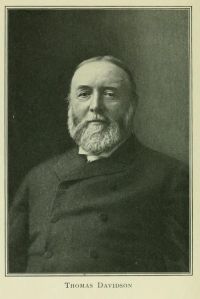 Thomas Davidson,
Chambers's Twentieth Century Dictionary 1908…
(1908)
Thomas Davidson,
Chambers's Twentieth Century Dictionary 1908…
(1908)
“ Honiton lace, a lace made at Honiton in Devonshire, remarkable for the beauty of its figures and sprigs; Imitation lace, any lace made by machinery; Mechlin lace, a lace with bobbin ground and designs outlined by thread or flat cord; Spanish lace, needle-point lace brought from Spanish convents since their dissolution—but probably of Flemish origin: cut and drawn work made in convents in Spain, of patterns usually confined to simple sprigs and flowers: a modern black-silk lace with large flower-patterns, mostly of Flemish make: a modern needle-point lace with large square designs ”
Mrs. Bury Palliser, History of Lace
“ The writer saw at Chantilly an aged lace-maker employed in making a lace ground of hair on the pillow, used, she was informed, by wig-makers to give the parting of the hair; but the fabric must be identical with the point tresse sent by the mother of Darnley to the Queen of Scots. Point tresse, when made out of the hair of aged people, is occasionally to be met with on the Continent, where, from its rarity, it fetches a high price. ”
Thomas Davidson,
Chambers's Twentieth Century Dictionary 1908…
(1908)
“ Brussels lace, an extremely fine lace with sprigs applied on a net ground; Duchesse lace, a Belgian pillow-lace having beautiful designs with cord outlines, often in relief; Guipure lace, any lace without a net ground, the pattern being held together by bars or brides ”
 Alice Morse Earle,
Child Life in Colonial Days
Alice Morse Earle,
Child Life in Colonial Days
“ Pillow lace was made, and the stitches were taught in families [340] of wealth; a guinea a stitch was charged by some teachers. Old lace pillows have been preserved to this day, with strips of unfinished lace and hanging bobbins, to show the kind of lace which was the mode—a thread lace much like the fine Swiss hand-made laces. ”
Related terms
Authors who wrote about “lace”
Mrs. Bury PalliserSamuel L. GoldenbergEmily Leigh LowesMaria Margaret PollenCharlotte KelloggMme. GoubaudMembers of the Arts and Crafts Exhibition SocietyArts and Crafts Exhibition SocietyJohn W. MollettAlice Morse Earle Thérèse de DillmontEffie Archer Archer
 Ann S. StephensMary Eleanor Wilkins FreemanAnne Knox ArthurG. Woolliscroft RheadVariousThomas DavidsonSusan GlaspellE. Lynn Linton
Maria Margaret PollenCharlotte KelloggMme. GoubaudMembers of the Arts and Crafts Exhibition SocietyArts and Crafts Exhibition SocietyJohn W. MollettAlice Morse EarleThérèse de DillmontEffie Archer ArcherAnn S. StephensMary Eleanor Wilkins FreemanAnne Knox ArthurG. Woolliscroft RheadVariousThomas DavidsonSusan GlaspellE. Lynn Linton