“ VENICE, August 18, 1506.To the first, greatest man in the world. Your servant and slave Albrecht Dürer sends salutation to his Magnificent master Wilibald Pirkheimer. My truth! I hear gladly and with great satisfaction of your health and great honours. I wonder how it is possible for a man like you to stand against so many wisest princes, swaggerers and soldiers ”
Albrecht Dürer
Definition and stakes
Albrecht Dürer (1471–1528), a key figure of the German Renaissance, was a painter, printmaker, and theorist celebrated for his expertise in woodcuts, engravings, and the incorporation of classical themes into Northern art. Born in Nuremberg, his journeys to Italy and interactions with artists such as Leonardo da Vinci and Raphael enriched his creative output, while his writings on mathematics and perspective demonstrated his intellectual depth.
Scholars like Sarah Tytler emphasize his background in goldsmithing and shift to painting, Herbert Furst underscores his distinctiveness across different periods, and T. Sturge Moore highlights his personal relationships and impact. Dürer’s enduring influence stems from his technical ingenuity, scholarly contributions, and blending of Gothic and Renaissance styles, establishing him as a vital link between Northern and Italian artistic traditions.
Quotes about “Albrecht Dürer”
Herbert E. A. Furst, Dürer (1910)
“ There are people who will tell you that the world is very much the same to-day as it was yesterday, and that, after all, human nature is human nature in all ages all the world over. But, beyond the fact that we all are born and we all must die, there is little in common between you and me—between us of to-day and those of yesterday—and we resemble each other most nearly in things that do not matter. Frankly, therefore, Albrecht Durer, who was born on May 21, 1471, is a human being from another world, and unless you realise that too, I doubt you can understand him, much less admire him. ”
Sarah Tytler, The Old Masters and Their Pictures…
“ Albrecht Dürer was born at that fittest birth-place for the great German painter, quaint old Nuremberg, in 1471. He was the son of a goldsmith, and one of a family of eighteen children; a home school in which he may have learnt early the noble, manly lessons of self-denial and endurance, which he practised long and well. He was trained to his father's trade until the lad's bent became so unmistakable that he was wisely transferred to the studio of a painter to serve his apprenticeship to art. ”
Related terms
Authors who wrote about “Albrecht Dürer”
T. Sturge MooreHerbert E. A. FurstM. F. SweetserHerbert Furst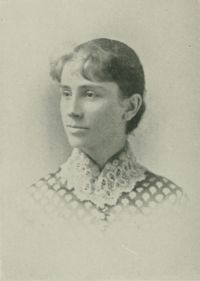 Jennie Ellis KeysorF. W. FairholtGeorge Sheringham
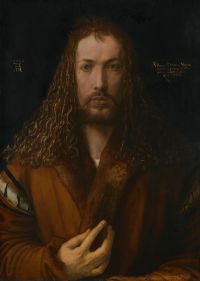 Albrecht DürerSarah TytlerVariousFrank Jewett MatherRandall DaviesChautauqua InstitutionEva Annie Madden
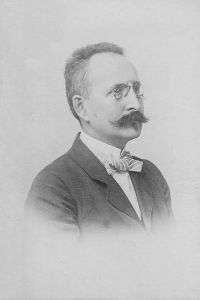 Leonard Jan Józef Lepszy
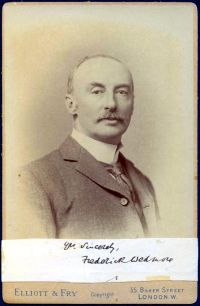 Sir Frederick Wedmore
 Sidney ColvinClara Erskine Clement WatersHume Nisbet
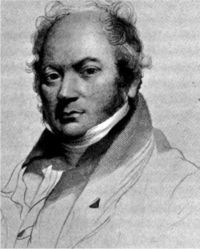 John Thomas Smith
Jennie Ellis KeysorF. W. FairholtGeorge SheringhamAlbrecht DürerSarah TytlerVariousFrank Jewett MatherRandall DaviesChautauqua InstitutionEva Annie MaddenLeonard Jan Józef LepszySir Frederick WedmoreSidney ColvinClara Erskine Clement WatersHume NisbetJohn Thomas Smith