Albrecht Dürer (1471–1528), a key figure of the German Renaissance, was a painter, printmaker, mathematician, and theorist whose work connected Northern and Italian artistic traditions. Celebrated for his skill in woodcut and engraving, he transformed printmaking through complex compositions and inventive use of light and shadow, as seen in his famous Meisterstiche series.
His body of work encompasses religious imagery, portraiture, and symbolic themes, enhanced by his travels to Italy, where he encountered classical styles and humanist ideas. Dürer’s theoretical writings, such as Of the Just Shaping of Letters, highlighted his dedication to mathematical accuracy in art, reinforcing his reputation as a thinker who advanced both technique and philosophy. His combination of technical skill and imaginative vision underscores his lasting impact on Renaissance art.

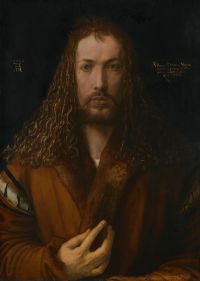 Albrecht Dürer,
Records of Journeys to Venice and the Low Countries
Albrecht Dürer,
Records of Journeys to Venice and the Low Countries

