
“ The long and thankless job of measuring the diameter of the earth, no matter what the weather might be, away from home and friends, footsore and weary, still plodding on, fatigued but determined to know the mean diameter of the earth, even if it took a leg, measuring on for thousands of weary miles, and getting farther and farther away from home, and then forgetting, perhaps, how many thousand miles they had gone, and being compelled to go back and measure it over again while their noses got red and their fingers were benumbed. ”
Diameter
Definition and stakes
The diameter, a fundamental concept in geometry, refers to the straight line segment that passes through the center of a circle or sphere, with its endpoints lying on the perimeter, or alternatively, the length of this segment—double the radius. This measurement extends beyond circles to describe the greatest distance between any two points in a set, as found in metric spaces.
Scholars such as Henry Dircks examined its mathematical connections, relating it to calculations of circumference and area, while Sir Thomas Little Heath framed it within Archimedean principles. Ethel Maltby Gehres clarified its core idea by comparing the diameters of Earth and the moon, and John Phin emphasized its practical use in measuring circular forms. Whether in technical illustrations or astronomical studies, the diameter continues to serve as a unifying measure, linking theoretical concepts with real-world applications.
Quotes about “diameter”
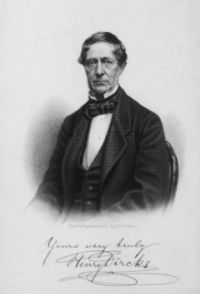 Henry Dircks,
Scientific Studies; or, Practical…
Henry Dircks,
Scientific Studies; or, Practical…
“ It is mathematically equal to the product of the length of the circumference, multiplied by half the radius. To square a circle of a given diameter in mètres, is the same as giving the number of squares, of a mètre in each side, of which the surface is the equivalent. If, the diameter being given, the exact circumference were known by a sort of inspiration, the superficial extent of the circular space would be deducible from the two numbers, by the mere multiplication of the numerical length of the circumference by the fourth of the diameter, or half the radius. ”
1911 Encyclopædia Britannica, Volume 8… (1911)
“ The diameter of a quadric surface is a line at the extremities of which the tangent planes are parallel. Newton defined the diameter of a curve of any order as the locus of the centres of the mean distances of the points of intersection of a system of parallel chords with the curve ”

Related terms
Authors who wrote about “diameter”
Dr. Edward J. Goodwin / Indiana State Legislature Joshua Rose
 Petrus RamusCharles B. Warring
 Louis-Benjamin Francœur
 John Phin
 Sir Thomas Little HeathAmor FennJames CutbushC. E. John Bourne
 Isaac TodhunterEllsworth M. LongfieldWilliam StirlingT.-P. Danger
 Isaac Newton
 Christiaan HuygensJoseph Nasmith
 John Timbs
 Richard A. ProctorGeorge Calver
Joshua RosePetrus RamusCharles B. WarringLouis-Benjamin FrancœurJohn PhinSir Thomas Little HeathAmor FennJames CutbushC. E. John BourneIsaac TodhunterEllsworth M. LongfieldWilliam StirlingT.-P. DangerIsaac NewtonChristiaan HuygensJoseph NasmithJohn TimbsRichard A. ProctorGeorge Calver