Radius

Definition and stakes

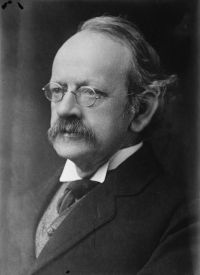
Portrait of John Henry Poynting John Henry Poynting,  1911 Encyclopædia Britannica (1911)

“ The waves from a source surrounded by a uniform medium at rest spread out as spheres with the source as centre. If we take one of these spheres a distance from the source very great as compared with a single wave-length, and draw a radius to a point on the sphere, then for some little way round that point the sphere may be regarded as a plane perpendicular to the radius or the line of propagation. Every particle in the plane will have the same displacement and the same velocity, and these will be perpendicular to the plane and parallel to the line of propagation. ”
Source: Wikisource

Ernst Lehrs,  Man or Matter

“ Here the radius, a straight line, is clearly the determining factor.
We now move to the other pole of the primary polarity, that is to the plane, and let the sphere arise by imagining the plane approaching an infinitely distant point evenly from all sides. We view the process realistically only by imagining ourselves in the plane, so that we surround the point from all sides, with the distance between us and
the point diminishing gradually.
”
Source: Gutenberg

Lee Parker Dean,  The evolution of worlds from nebulae (1894)

“ Yet a sphere with that radius of ten year’s flight would cover such an enormous quantity of space as to be beyond our comprehension and still be of no consequence in comparison with the spheres of one hundred, one thousand, one million, or one thousand millions of years radii. ”
Source: Gutenberg

Get perspective with Kwize: daily news enlightened by great literature