Refraction

Definition and stakes

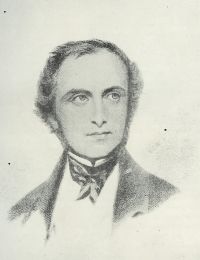
Portrait of Birge Harrison Birge Harrison,  Landscape Painting (1909)

“ For the purposes of this paper therefore the reader will kindly assume refraction to stand for that intimate effect of one mass of color or value upon its adjoining mass which results in the "lost-edge," and a general diffusion of tone, thus giving to pictures their atmospheric quality.
Now refraction is only in a very limited sense an objective fact. It is mainly a visual fact whose operation is due to the imperfect construction of the lens of the human eye. The scientific fact is that the edges of things are sharp and hard as a rule.
”
Source: Wikisource

Bertha May Clark,  General Science

“ When a ray of light passes from water or glass into air, the refracted ray is bent away from the perpendicular so that the angle of refraction is greater than the angle of incidence.
The bending or deviation of light in its passage from one substance to another is called refraction.
FIG. 66.—A fish at A seems to be at B.
108. How Refraction Deceives us. Refraction is the source of many illusions; bent rays of light make objects appear where they really are not.
”
Source: Gutenberg

Portrait of Thomas Hobbes Thomas Hobbes,  The English Works of Thomas Hobbes… (1839)

“ It is manifest from hence, that the cause of refraction consisteth only in the obliquity of the line of incidence, whether the incident body penetrate both the mediums, or without penetrating, propagate motion by pressure only.
Things thrown out of a thinner into a thicker medium are so refracted that the angle refracted is greater than the angle of inclination.
”
Source: Gutenberg

Get perspective with Kwize: daily news enlightened by great literature