Summary

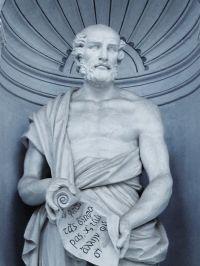
Portrait of Theophrastus Theophrastus Theophrastus's History of Stones (1774)

When I can be informed how something of a vegetable or animal Nature can be produced otherwise than from Seed or Egg, I may come over to the Doctor's Opinion; that Corals have been formed by mere Apposition of Particles wash'd out of the neighbouring Rocks: But till then must believe, that no animal or vegetable Matter can be produced otherwise than by organized Growth: nor is there now the least Doubt that they are to be ranged in the animal Kingdom.
Source: Wikisource

Portrait of Theophrastus Theophrastus Theophrastus's History of Stones (1774)

That Amber is a Stone, or native Fossile, the best of the modern Writers seem as certain, as that Gems, Rocks, or Minerals are so. It has, however, for many Ages, been judged by some, to be of a vegetable, and by others an animal, nature. And a thousand idle and incoherent Systems have been received as to its Formation: Dioscorides thought it an Exsudation of the black Poplar; and Pliny, of the Pine; and others, the Fat or Semen of Whales. And it is but of late, that the World has been again brought into the Opinion, that it is, as this Author esteemed it, a mere native Fossile.
Source: Wikisource

Portrait of Theophrastus Theophrastus Theophrastus's History of Stones (1774)

There is great Difference between changing the Substance, and only covering the Surface of a Body. These Petrifactions, as they are called, being no other than Precipitations of Matter too heavy to be longer sustained in the Water; and which, being very fine, adapts itself to every Prominence and Cavity of the Body it settles upon, and exactly assumes its Shape.
Source: Wikisource

Get perspective with Kwize: daily news enlightened by great literature