Minerals

Definition and stakes

W. D. Keller,  The Common Rocks and Minerals of Missouri

“ A mineral is characterized by a constancy of composition and of properties which sets it apart from rocks which vary widely. Minerals may be metallic, like pyrite, or non-metallic, like barite; they may be ore, like galena, or rock-forming, like quartz or feldspar; they may show crystal faces, or they may be fragments with rounded or broken surfaces. A favored definition teaches that “a mineral is a naturally occurring, inorganic substance having a definite chemical composition and definite physical properties, within limits.” ”
Source: Gutenberg

Grenville A. J. Cole,  Rocks and Their Origins (1912)

“ Seeing that some rocks are merely massive minerals, that is, large masses formed of one mineral species, while others consist of crystals or fragments of a variety of minerals, it may be well to remind ourselves of the distinction between minerals and rocks. We may define a mineral as a natural substance formed by inorganic action; its chemical composition is constant ”
Source: Gutenberg

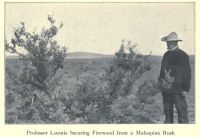
Portrait of Frederic Brewster Loomis Frederic Brewster Loomis,  Field Book of Common Rocks and Minerals

“ It is a long way from finding and mining gold, chalcopyrite, hematite, carnotite, etc., through the raw materials, gold, copper, iron, etc., to the finished watch, but the minerals are the foundations of the watch; and it took centuries to find them and learn one by one how to use them, from the gold 4 10,000 years ago down to the radium within the last fifty years. Then too there is joy in going out into Nature’s wild and raw places, joy in being on the foundations of the earth, joy in the scenery, in the beauty of the minerals themselves.
But why collect the rocks and minerals?
”
Source: Gutenberg

Get perspective with Kwize: daily news enlightened by great literature