Meteorite

Definition and stakes

Jean LaPaz,  Space Nomads: Meteorites in Sky…

“ Scientists in Germany, England, France, and Russia engaged in the painstaking mineralogical study and classification of individual meteorite specimens.
The modern science of meteoritics is rooted deep in the nineteenth century. Many special fields of investigation had their beginnings then. Scientists became interested in the chemistry, the mineralogy, and the metallurgy of meteorites; in the orbits of meteorites and the trajectories they follow through the earth’s atmosphere down to impact with the ground; and in the distribution of meteorite falls in space and time.
”

Source: Gutenberg

Jean LaPaz,  Space Nomads: Meteorites in Sky…

“ The majority of the meteors we observe represent the heat-induced “evaporation” of exceedingly small fragments of cosmic matter. The smallest meteor-forming bodies reach the surface of the earth only as the finest of dust particles or as microscopic droplets of solidified meteorite melt.
These residues descend slowly through the atmosphere and may be carried for great distances. Afterwards, they may be found scattered so widely and uniformly on the ground that their presence in any given locality cannot be accounted for by the fall of any specific meteorite.
”
Source: Gutenberg

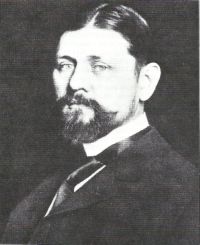
Portrait of Robert S. Ball Robert S. Ball,  The Story of the Heavens

“ It is just possible that a meteorite expelled from the moon in remote antiquity, when its volcanoes were active, may, under the influence of the disturbances of the other bodies of the system, have its orbit so altered, that at length it comes within reach of the atmosphere and falls to the earth, but in no circumstances could the moon send us a meteorite at present. It is therefore reasonable to look elsewhere in our search for volcanoes fulfilling the conditions of the problem. ”
Source: Gutenberg

Get perspective with Kwize: daily news enlightened by great literature