Summary

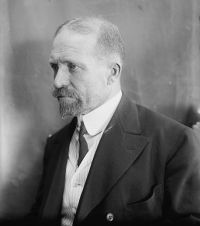
Portrait of David P. Todd David P. Todd Astronomy: The Science of the Heavenly Bodies

There the sun in every detail of disk and spectrum is photographed by day, and stars with their spectra and the nebulæ by night. Great streams of stars are discovered and the speed and direction of their drift ascertained. The marvels of the spiral nebulæ are unfolded, their multitudinous forms portrayed and deciphered.
And their distances? And the distances of the still more wonderful clusters? Far, inconceivably far beyond the Milky Way. And are they "island universes"? And can man, the measurer, measure the distance of the "mainland" beyond?
Source: Gutenberg

Portrait of David P. Todd David P. Todd Astronomy: The Science of the Heavenly Bodies

Time went on, the heavens revolved; sun, moon, and stars kept their appointed places, and Arab and Moor and the savage monarchs of the East were there to observe and record, even if the world-mind was lying fallow, and no genius had been born to inspire anew that direction of human intellect on which the later growth of science and civilization depends.
Source: Gutenberg

Portrait of David P. Todd David P. Todd Astronomy: The Science of the Heavenly Bodies

If we pass from sun to star, the triumph of the spectroscope has been everywhere complete and significant. As the spectroscopic survey of the stars grew toward completeness, it became evident that the swarming hosts of the stellar universe are in constant motion through space, not only athwart the line of vision as their proper motions had long disclosed, but some stars are swiftly moving toward our solar system and others as swiftly from it.
Source: Gutenberg

Get perspective with Kwize: daily news enlightened by great literature