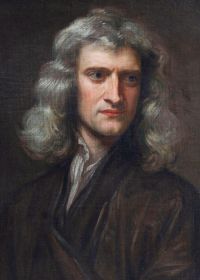
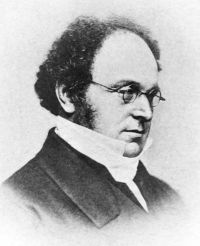
The Philosophiæ Naturalis Principia Mathematica (1687), Isaac Newton’s foundational work, introduced the principles of motion and universal gravitation, forming the basis of classical mechanics. This Latin text, renowned for its mathematical precision, transformed natural philosophy by integrating the movements of celestial and earthly bodies. Scholars such as Aram D’Abro highlighted its function as a logical framework for scientific reasoning, whereas John Stuart Mill raised doubts about the independence of mathematical truths from empirical evidence.
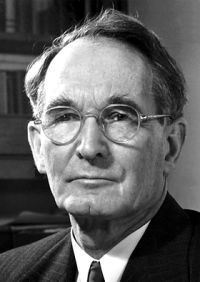
P. W. Bridgman later contested the idea of mathematics as an exact reflection of nature, advocating instead for its constructed and fallible character. The Principia therefore emerged as a central subject in discussions concerning the relationship between mathematics, physics, and philosophical exploration, influencing scientific thinking for centuries.