Calculus

Definition and stakes

Portrait of Auguste Comte Auguste Comte,  The philosophy of mathematics

“ It is true that in the greatest number of important cases its use requires to be preceded and prepared by that of the Calculus of indirect Functions, which is intended to facilitate the establishment of equations. But, although algebra has then only a secondary office to perform, it has none the less a necessary part in the complete solution of the question, so that the Calculus of direct Functions must continue to be, by its nature, the fundamental base of all mathematical analysis. ”
Source: Gutenberg

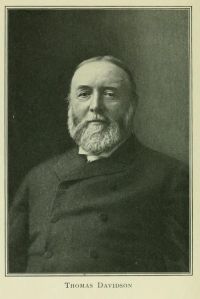
Portrait of Thomas Davidson Thomas Davidson,  Chambers's Twentieth Century Dictionary 1908… (1908)

“ Calculus, kal′kū-lus, n. a stone-like concretion which forms in certain parts of the body: one of the higher branches of mathematics:—pl. Calculi (kal′kū-li) .—adj. Cal′culose, stony or like stone: gritty: affected with stone or with gravel.—Calculus of finite differences not merely does not consider differentials, but does not assume continuity.—Differential calculus, a method of treating the values of ratios of differentials or the increments of quantities continually varying; Integral calculus, the summation of an infinite series of differentials. ”
Source: Wikisource

Portrait of Auguste Comte Auguste Comte,  The philosophy of mathematics

“ The complete solution of every question of the calculus, from the most elementary up to the most transcendental, is necessarily composed of two successive parts, whose nature is essentially distinct. In the first, the object is to transform the proposed equations, so as to make apparent the manner in which the unknown quantities are formed by the known ones: it is this which constitutes the algebraic question. ”
Source: Gutenberg

Get perspective with Kwize: daily news enlightened by great literature