Arithmetic, a fundamental branch of mathematics, centers on numerical operations such as addition, subtraction, multiplication, and division, as well as exponentiation and logarithms. It functions across number systems—integers, rationals, reals—and numeral systems like decimal and binary. Authors such as John Ruskin stressed its prevalence in everyday life, while John Stuart Mill focused on its sensory-based instructional approaches.
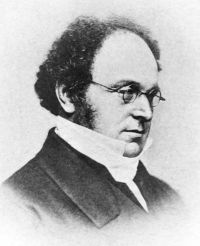
Augustus De Morgan simplified arithmetic to addition and subtraction, emphasizing its basic nature. These viewpoints illustrate arithmetic as both a practical instrument and a theoretical foundation, linking historical methods with contemporary computational reasoning. Its lasting significance stems from its role as the cornerstone of mathematics and its versatility across various fields.
 John Ruskin,
Mornings in Florence
John Ruskin,
Mornings in Florence