The decimal system, a numerical notation based on powers of ten, simplifies arithmetic operations and the expression of fractions. Historically, Simon Stevin (1585) was among the first to introduce decimal fractions, promoting their use in weights, measures, and currency, although early representations lacked uniformity.
Augustus De Morgan highlighted the usefulness of decimals in commercial calculations, while Henry Dudeney examined their recurring, infinite characteristics in the context of fraction conversion. Authors such as D. V. T. Qua connected decimals to the metric system’s broad, standardized design, emphasizing their role in advancing modern measurement. These viewpoints together demonstrate decimals as both a practical instrument and a fundamental component of mathematical uniformity.
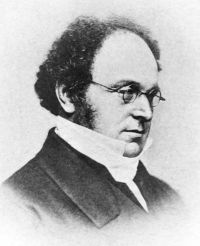 Augustus De Morgan,
Elements of arithmetic
(1858)
Augustus De Morgan,
Elements of arithmetic
(1858)