Numerator

Definition and stakes

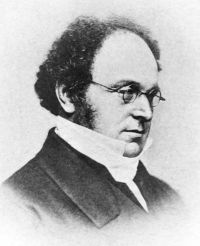
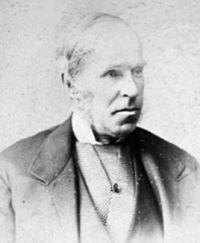
Portrait of Augustus De Morgan Augustus De Morgan,  Elements of arithmetic (1858)

“ Then, if there be any figures before the point, they make the whole number which the fraction contains. The first figure after the point with the denominator 10, the second with the denominator 100, and so on, are the fractions of which the first fraction is composed.
135. Decimal fractions are not usually written at full length. It is more convenient to write the numerator only, and to cut off from the numerator as many figures as there are ciphers in the denominator, when that is possible, by a point.
”
Source: Gutenberg

Portrait of Augustus De Morgan Augustus De Morgan,  Elements of arithmetic (1858)

“ Multiply the numerator by the whole number, and let the denominator remain.
117. If the denominator of the fraction be divisible by the whole number, the rule may be stated thus: Divide the denominator of the fraction by the whole number, and let the numerator remain. For example, multiply 7/36 by 6. This (116) is 42/36, which, since the numerator and denominator are now divisible by 6, is (108) the same as 7/6. It is plain that 7/6 is made from 7/36 in the manner stated in the rule.
118. Multiplication has been defined to be the taking as many of one number as there are units in another.
”
Source: Gutenberg

Portrait of John Casey John Casey,  The First Six Books of the Elements of Euclid

“ Thus, a fraction is denoted by two numbers parted by a horizontal line; the lower, called the denominator, denotes the number of equal parts into which the integer is divided; and the upper, called the numerator, denotes the number of these equal parts which are taken. Hence it follows, that if the numerator be less than the denominator, the fraction is less than unity. If the numerator be equal to the denominator, the fraction is equal to unity; and if greater than the denominator, it is greater than unity. ”
Source: Gutenberg

Get perspective with Kwize: daily news enlightened by great literature