Denominator

Definition and stakes

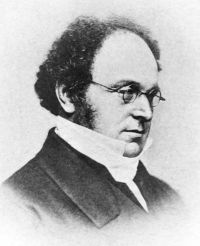
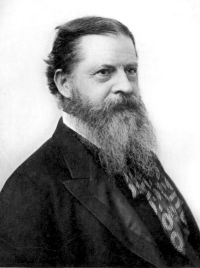
Portrait of Augustus De Morgan Augustus De Morgan,  Elements of arithmetic (1858)

“ Multiply the numerator by the whole number, and let the denominator remain.
117. If the denominator of the fraction be divisible by the whole number, the rule may be stated thus: Divide the denominator of the fraction by the whole number, and let the numerator remain. For example, multiply 7/36 by 6. This (116) is 42/36, which, since the numerator and denominator are now divisible by 6, is (108) the same as 7/6. It is plain that 7/6 is made from 7/36 in the manner stated in the rule.
118. Multiplication has been defined to be the taking as many of one number as there are units in another.
”
Source: Gutenberg

Portrait of Charles Sanders Peirce Charles Sanders Peirce,  On a New List of Categories (1867)

“ And it is remarkable that, among all the definitions of the proposition, for example, as the oratio indicativa, as the subsumption of an object under a concept, as the expression of the relation of two concepts, and as the indication of the mutable ground of appearance, there is, perhaps, not one in which the conception of reference to an object or correlate is not the important one. In the same way, the conception of reference to an interpretant or third, is always prominent in the definitions of argument. ”
Source: Wikisource

Get perspective with Kwize: daily news enlightened by great literature