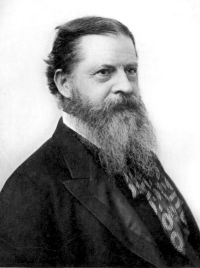
Charles Sanders Peirce

Charles Sanders Peirce

Summary

Portrait of Charles Sanders Peirce Charles Sanders Peirce On a New List of Categories (1867)

And it is remarkable that, among all the definitions of the proposition, for example, as the oratio indicativa, as the subsumption of an object under a concept, as the expression of the relation of two concepts, and as the indication of the mutable ground of appearance, there is, perhaps, not one in which the conception of reference to an object or correlate is not the important one. In the same way, the conception of reference to an interpretant or third, is always prominent in the definitions of argument.
Source: Wikisource

Portrait of Charles Sanders Peirce Charles Sanders Peirce On a New List of Categories (1867)

That universal conception which is nearest to sense is that of the present, in general. This is a conception, because it is universal. But as the act of attention has no connotation at all, but is the pure denotative power of the mind, that is to say, the power which directs the mind to an object, in contradistinction to the power of thinking any predicate of that object, — so the conception of what is present in general, which is nothing but the general recognition of what is contained in attention, has no connotation, and therefore no proper unity.
Source: Wikisource

Portrait of Charles Sanders Peirce Charles Sanders Peirce On a New List of Categories (1867)

Now, empirical psychology discovers the occasion of the introduction of a conception, and we have only to ascertain what conception already lies in the data which is united to that of substance by the first conception, but which cannot be supposed without this first conception, to have the next conception in order in passing from being to substance.
Source: Wikisource

Get perspective with Kwize: daily news enlightened by great literature