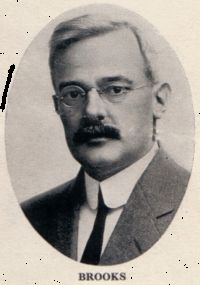
The concept of "singular" refers to a grammatical category that denotes a single entity, as opposed to the plural. Scholars such as Goold Brown and G. H. Armstrong investigated its syntactic principles, focusing on agreement between verbs and subjects in constructions like "Bread and butter is sufficient." Adam Clarke took a philosophical approach, critiquing an overemphasis on individuality, while Adam Smith traced its origins in the inflection of verbs.
James Legge underscored its structural distinctiveness in texts, and William James analyzed its function in distinguishing universal from specific reference. These viewpoints illustrate how "singular" connects grammar, logic, and existential thought, influencing both linguistic accuracy and conceptual clarity.