Infinitive

Definition and stakes

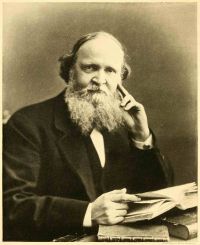
Portrait of Goold Brown Goold Brown,  The Grammar of English Grammars

“ When the infinitive is the expression of an immediate action, which it must be, after the verbs, bid, can, dare, do, feel, hear, let, make, may, must, need, see, shall, and will, the preposition TO is omitted."—Essay on Grammar, p. 129. That the truest character of the infinitive is that of a verbal noun, is not to be conceded, in weak abandonment of all the reasons for a contrary opinion, until it can be shown that the action or being expressed by it, must needs assume a substantive character, in order to be "that towards which the preceding verb is directed." ”

Source: Gutenberg

Portrait of Goold Brown Goold Brown,  The Grammar of English Grammars…

“ For though the infinitive verb never agrees with a subject or nominative, like a finite verb, it most commonly has a very obvious reference to something which is the subject of the being, action, or passion, which it expresses; and this reference is one of the chief points of difference between the infinitive and a noun. S. S. Greene, in a recent grammar, absurdly parses infinitives "as nouns," and by the common rules for nouns, though he begins with calling them verbs. ”
Source: Wikisource

Frank Edgar Farley,  An Advanced English Grammar with Exercises

“ Each of these infinitives (to hope, to flatter, etc.) is a noun, for each is the simple subject of a sentence. Besides, an ordinary noun may be substituted for each infinitive with no change in meaning; as,—“Hope is our only resource”; “Flattery is not my custom”; “Sleep was an impossibility.”
But each of these infinitives is also a verb,—for (1) it expresses action; (2) it may be modified by an adverb, as in No. 5; (3) it takes an object if it is transitive, as in No. 6.
An infinitive (as the examples show) has regularly no subject and therefore lacks both number and person.
”
Source: Gutenberg

Get perspective with Kwize: daily news enlightened by great literature