Auxiliary

Definition and stakes

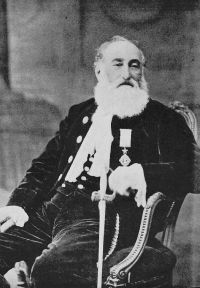
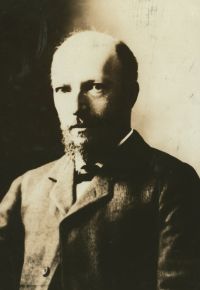
Portrait of Goold Brown Goold Brown,  The Grammar of English Grammars

“ There are four PRINCIPAL PARTS in the conjugation of every simple and complete verb; namely, the Present, the Preterit, the Imperfect Participle, and the Perfect Participle. [256] A verb which wants any of these parts, is called defective; such are most of the auxiliaries.
An auxiliary is a short verb prefixed to one of the principal parts of an other verb, to express some particular mode and time of the being, action, or passion. The auxiliaries are do, be, have, shall, will, may, can, and must, with their variations.
”
Source: Gutenberg

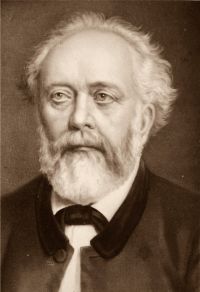
Portrait of Goold Brown Goold Brown,  The Grammar of English Grammars (1882)

“ OBS. 3.--These authors are wrong in calling ought a helping verb, and so is Oliver B. Peirce, in calling "ought to," and "ought to have" auxiliaries; for no auxiliary ever admits the preposition to after it or into it: and Murray of Holdgate is no less in fault, for calling let an auxiliary; because no mere auxiliary ever governs the objective case. The sentences, "He ought to help you," and, "Let him help you," severally involve two different moods: they are equivalent to, "It is his duty to help you;"--"Permit him to help you." Hence ought and let are not auxiliaries, but principal verbs. ”
Source: Wikisource

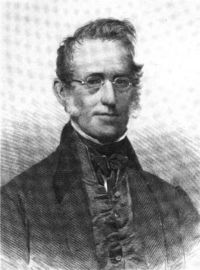
G. H. Armstrong,  English Grammar and Composition for Public Schools

“ Write four examples of the verb be used as an independent verb.
2. Write four examples of the verb be used in making the progressive form.
3. Write four examples of the verb be used in forming the passive voice.
LESSON XLVIII. OTHER AUXILIARY VERBS.
In the last three lessons we have studied the auxiliaries used in distinguishing the time of an action. We shall now study the auxiliaries can, may, must, ought, should and would, which enable us to express other distinctions.
CAN.
Can is used to denote power or ability; as, I can sing. He could write very rapidly.
”
Source: Gutenberg

Get perspective with Kwize: daily news enlightened by great literature