Subjunctive

Definition and stakes

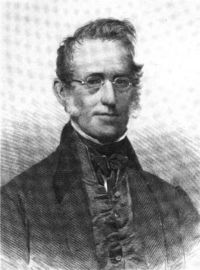
Samuel Kirkham,  English Grammar in Familiar Lectures

“ As a verb in the indicative mood is converted into the subjunctive when it is preceded by a conjunction expressing doubt, contingency, supposition, &c., so a verb in the potential mood, may, in like manner, be turned into the subjunctive; as, "If I could deceive him, I should abhor it; Though he should increase in wealth, he would not be charitable." ”
Source: Gutenberg

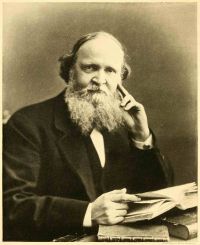
Frank Edgar Farley,  An Advanced English Grammar with Exercises

“ In conditions contrary to fact, the subjunctive without if is common. In this use, the subject follows the verb (§ 281) .
Were he my friend, I should expect his help. [= If he were my friend. Present condition, contrary to fact.] Had he been my friend, I should have expected his help. [= If he had been my friend. Past condition, contrary to fact.] Note. In older English, the subjunctive may be used in both clauses: as,—“He were no lion, were not Romans hinds” (Shakspere) .
Future Conditions 425. Future conditions always imply doubt, for no one can tell what may or may not happen to-morrow.
”
Source: Gutenberg

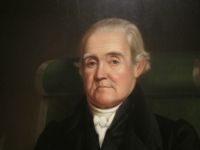
R. G. Latham,  A Handbook of the English Language

“ When the second formula is the one required, there is an element of doubt, and the verb should be in the subjunctive mood. If (as may or may not be the case) he be gone, I must follow him.
§ 512. The use of the word that in expressions like I eat that I may live, &c., is a modification of the subjunctive construction, that is conveniently called potential. It denotes that one act is done for the sake of supplying the power or opportunity for the performance of another.
The most important point connected with the powers of that is the so-called succession of tenses.
”
Source: Gutenberg

Get perspective with Kwize: daily news enlightened by great literature