Summary

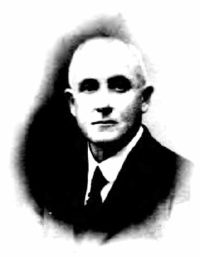
Portrait of C. H. Grandgent C. H. Grandgent An Outline of the Phonology and Morphology of Old Provençal

The Latin perfect came to be restricted to its aorist sense, and the perfect was expressed by compounds of habēre with the perfect participle. In the Romance languages all compound tenses were eventually formed in this way: ai cantat, avia cantat, aurai cantat, etc. In Provençal the auxiliary is sometimes ęsser, instead of avẹr, if the main verb is reflexive, passive, or neuter; ęsser is particularly common with neuter verbs of motion: sọi vengütz. [112] A participle used with avẹr may agree in gender and number with the direct object, if there is one: ai cantat or cantada la cansọ.
Source: Gutenberg

Portrait of C. H. Grandgent C. H. Grandgent An Outline of the Phonology and Morphology of Old Provençal

Short, unemphatic words had no accent in Vulgar Latin, and were attached as particles to the beginning or the end of another word: te vídet, áma me. Such words, if they were not monosyllabic, tended to become so; a disyllabic proclitic beginning with a vowel regularly, in Vulgar Latin, lost its first syllable: illum vídeo > V. L. lu véyo > Pr. lo vei. A word which was used sometimes independently, sometimes as a particle, naturally developed double forms.
Source: Gutenberg

Portrait of C. H. Grandgent C. H. Grandgent An Outline of the Phonology and Morphology of Old Provençal

Most of the verbs, however, attach the -üt to the stem of the preterit: nasc, nascüt; pasc, pascüt; tems, temsüt; tesc, tescüt, venc, vencüt (from vẹnser) ; visc, viscüt. A few have both forms: agüt avüt; cazegüt cazüt; vengüt venüt. It is to be noted, in the case of verbs that add -üt to the preterit, that if the third person singular of the preterit ends in a voiceless consonant preceded by a vowel or l or n, that consonant is voiced in the participle: ac, agüt
Source: Gutenberg

Get perspective with Kwize: daily news enlightened by great literature