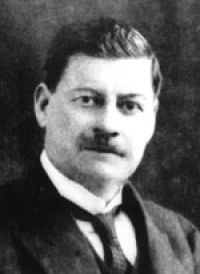
Charles Eliot

Charles Eliot

Summary

Portrait of Charles Eliot Charles Eliot A Finnish Grammar

Nearly all modern languages have the same origin. Out of a mass of dialects one is selected by circumstances as representative, and becomes a language while the others remain dialects. A number of such dialects are spoken in Finland, and no doubt if any of them had received an independent literary development, it might have produced a language almost as different from written Finnish as is Esthonian. Neither can one be surprised at the number of newly invented words in Finnish.
Source: Gutenberg

Portrait of Charles Eliot Charles Eliot A Finnish Grammar

Minä itse, I myself; hän on itse hyvyys, he is goodness itself. When itse is used with a substantive it can either precede, in which case it is not declined and takes no pronominal suffix, or else follow, in which case it is put in the same case as the substantive and has a suffix. Itse asiassa se ei mitään tee, as a matter of fact that makes no difference. Kuulin kerran, ukon itsensä puhuvan, I once heard the old man himself say.
When itse is used with postpositions it often remains unchanged while the postposition takes the pronominal suffix.
Source: Gutenberg

Portrait of Charles Eliot Charles Eliot A Finnish Grammar

Hän juuri toimittaa sitä asiata, he is just now doing the business. Often there is a difference in the meaning of a verb, according as it is followed by the accusative or partitive; the former denoting that the action is more complete. Han löi koiraa, he struck the dog; but hän löi koiran, he killed the dog. Hän repi kirjaa, he tore the book; but repi kirjan, he tore the book to pieces. A great many verbs never take a total object, because from the nature of their signification, their action cannot be definite and complete, but must be regarded as continuous.
Source: Gutenberg

Get perspective with Kwize: daily news enlightened by great literature