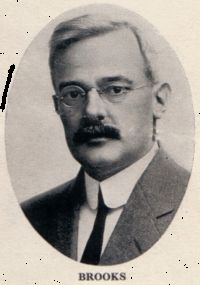
The grammatical concept of "plural" refers to a quantity greater than one, usually indicating agreement among nouns, verbs, and adjectives with more than a single entity. In various languages, this is expressed through inflection, such as the "-s" in English or the "-s" in French, while others use dual or paucal systems. Scholars such as Goold Brown and Stratton D.
Brooks examined its syntactic features, focusing on verb agreement with collective nouns and irregular plural forms. R. G. Latham emphasized the interaction between singular and plural predicates, while Noah Webster observed semantic changes in plural forms. These studies illustrate the plural's dual function—as both a grammatical indicator and a representation of conceptual plurality—shaped by linguistic and contextual factors.
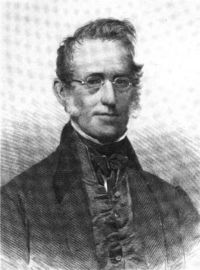 Goold Brown,
The Grammar of English Grammars
(1882)
Goold Brown,
The Grammar of English Grammars
(1882)