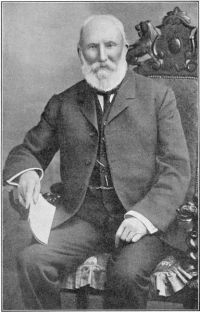
 R. H. Mathews,
The Wiradyuri and Other Languages of New South Wales
R. H. Mathews,
The Wiradyuri and Other Languages of New South Wales
“ Instrumental.—When an instrument is the remote object of the verb, the accusative remains unchanged, but the instrumental case takes the same suffix as the nominative-agent; thus, mêndu wagan bŭrgandu bume, the man hit a crow with a boomerang. Inarru burumain kunnedu bangabe, the woman cut a dog with a yamstick.In the above examples, as well as in the sentences illustrating the nominative-agent, it will be seen that the agent suffix has euphonic changes according to the termination of the word it is attached to. This may be said of the suffixes in all the cases of nouns and adjectives. ”
