Summary

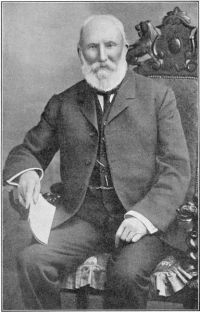
Portrait of Robert Hamilton Mathews Robert Hamilton Mathews The Wiradyuri and Other Languages of New South Wales

When the difficulties encountered in obtaining the grammar of any language which is purely colloquial are taken into consideration, I feel sure that all necessary allowances will be made for the imperfections of my work.
The initiation ceremonies of the Wiradyuri tribes, which are of a highly interesting character, have been fully described by me in contributions to several societies and other learned institutions.
Source: Wikisource

Portrait of Robert Hamilton Mathews Robert Hamilton Mathews The Wiradyuri and Other Languages of New South Wales

In all the languages treated in this article, in every part of speech subject to inflexion, there are double forms of the first person, of the dual and plural, similar in character to what have been reported from many islands in Polynesia and Melanesia, and the tribes of North America. Separate forms for "we two," and "he and I," were observed by Rev. James Günther among the pronouns of the Wiradyuri natives at Wellington, [5] but as he does not mention anything of the kind in the plural, we may conclude that he did not observe it.
Source: Wikisource

Portrait of Robert Hamilton Mathews Robert Hamilton Mathews The Wiradyuri and Other Languages of New South Wales

The Wiradyuri Language. Articles. There are no articles, properly so-called, in the language. The demonstratives "this" and "that" do duty for our "a" and "the." If it be desired to definitely say that only one is meant, the numeral, ngunbai, is employed.
In all the sentences illustrating the cases of nouns and other parts of speech in this paper, the demonstratives are omitted. A native would say, "Man [that over yonder] beat child [this in front] ," the proper demonstratives being inserted where illustrated by the brackets.
Source: Wikisource

Get perspective with Kwize: daily news enlightened by great literature