Summary

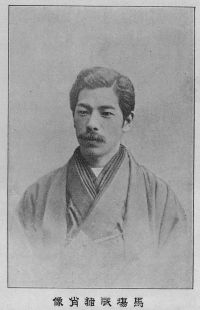
Portrait of Tatui Baba Tatui Baba An Elementary Grammar of the Japanese Language (1888)

OF VERBS.
A Verb is a word used to express existence or action. Verbs are of three kinds—Active, Passive, and Neuter.
An Active Verb expresses action passing from an actor to some object; as, Watakusi wa shomotu wo mimasu, I see or read a book. A Passive Verb expresses the suffering of an action performed by another; as, Watakusi wa hita ni [1] miraremasu, I am seen by people. A Neuter Verb is neither active nor passive; it expresses existence, condition of being, and action limited to the actor
Source: Wikisource

Portrait of Tatui Baba Tatui Baba An Elementary Grammar of the Japanese Language (1888)

Verbs have three tenses—the Present, the Past, and the Future.
The Present Tense expresses what is going on at present; as, Watakusi ga yomimasu, I read, or am reading. The Past Tense represents an action as finished; as, Watakusi wa kono shomotu wo yomimasita, I have read, or I read this book. The Future Tense represents an action which is yet to be done
Source: Wikisource

Portrait of Tatui Baba Tatui Baba An Elementary Grammar of the Japanese Language (1888)

Verbs have five moods—the Indicative, Potential, Subjunctive, Imperative, and Infinitive.
The Indicative Mood is the simple affirmation of a fact; as, Watakusi ga mimasu, I see (it) . The Potential Mood expresses the power of doing an action; as, Watakusi wa sore ga miyemusu, or Watakusi wa sore wo miru koto ga dekimasu, I can see it or that. The Subjunctive Mood represents a thing under a condition, and is preceded by a conjunction (mosi) , and followed by another conjunction (nara or naraba)
Source: Wikisource

Get perspective with Kwize: daily news enlightened by great literature