R

Definition and stakes

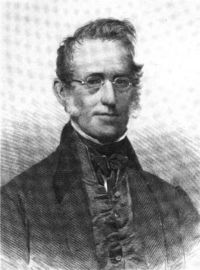
Portrait of Goold Brown Goold Brown,  The Grammar of English Grammars (1882)

“ The consonant R, called also a semivowel and a liquid, has usually, at the beginning of a word, or before a vowel, a rough or pretty strong sound; as in roll, rose, roam, proudly, prorogue. "In other positions," it is said by many to be "smooth" or "soft;" "as in hard, ford, word."--W. Allen.
OBSERVATIONS.
OBS. 1.--The letter R turns the tip of the tongue up against or towards the roof of the mouth, where the sound may be lengthened, roughened, trilled, or quavered.
”
Source: Wikisource

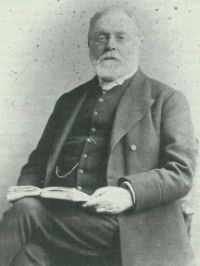
R. G. Latham,  A Handbook of the English Language

“ On incompletion of the radical.—Let there be in a given language a series of roots ending in -t, as sæmat. Let a euphonic influence eject the -t, as often as the word occurs in the nominative case. Let the nominative case be erroneously considered to represent the root, or radical, of the word. Let a derivative word be formed accordingly, i.e., on the notion that the nominative form and the radical form coincide. Such a derivative will exhibit only a part of the root; in other words, the radical will be incomplete. ”
Source: Gutenberg

The Art of the Book

“ The tail of the “R,” for instance, which in Jenson's type is thrust forward at an angle of about forty-five degrees, at the hands of some of the seventeenth-century engravers tends to drop more vertically, as in the “R” of “modern” type, the development of which we are seeking to trace. How far and how soon the lettering of the engravers of illustrations came to modify the letters cast by the type-founders is a question which invites further research. ”
Source: Gutenberg

Get perspective with Kwize: daily news enlightened by great literature