Liquid

Definition and stakes

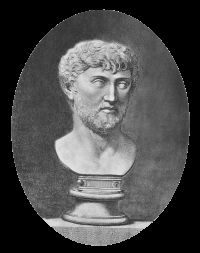
Portrait of Titus Lucretius Carus Titus Lucretius Carus,  On the Nature of Things

“ But what are liquid, formed Of fluid body, they indeed must be Of elements more smooth and round—because Their globules severally will not cohere: To suck the poppy-seeds from palm of hand Is quite as easy as drinking water down, And they, once struck, roll like unto the same. But that thou seest among the things that flow Some bitter, as the brine of ocean is, Is not the least a marvel... For since 'tis fluid, smooth its atoms are And round, with painful rough ones mixed therein ”
Source: Gutenberg

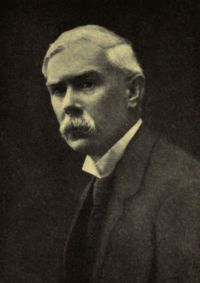
Vivian Byam Lewes and Georg Lunge,  1911 Encyclopædia Britannica (1911)

“ Remove any portion and a part of the space will be left unoccupied by liquid. Part of the liquid surface is then otherwise conditioned than by the form of the wall or bounding surface of the region; and if the portion of the wall not in contact with the liquid is removed the form and quantity of the liquid are in no way affected. Hence a liquid can be kept in an open vessel; a gas cannot so be. To quote the differentia of Sir Oliver Lodge: “A solid has volume and shape; a liquid has volume, but no shape; a gas has neither volume nor shape.” ”
Source: Wikisource

Thomas J. Bell,  History of the Water Supply of the World

“ C. Every liquid which, when placed in a white porcelain vessel to the depth of one inch, exhibits under daylight distinct color.
D. Every liquid which contains in solution, in every 100,000 [8] parts by weight, more than two parts of any metal, except calcium, magnesium, potassium and sodium.
E. Every liquid which in every 100,000 parts by weight contains in solution, suspension, chemical combination or otherwise, more than 0.5 metallic arsenic.
F. Every liquid which, after the addition of sulphuric acid, contains in every 100,000 parts by weight more than one part of free chlorine.
”
Source: Gutenberg

Get perspective with Kwize: daily news enlightened by great literature