Viscosity

Definition and stakes

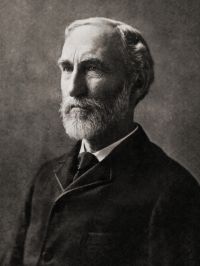
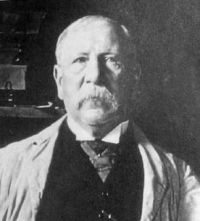
Portrait of Josiah Willard Gibbs Josiah Willard Gibbs,  Scientific Papers of Josiah Willard Gibbs (1906)

“ When the establishment of equilibrium is rapid, the variation of the tension from its normal value will be manifested especially during the extension or contraction of the surface, the phenomenon resembling that of viscosity, except that the variations of tension arising from variations in the densities at and about the surface will be the same in all directions, while the variations of tension due to any property of the surface really analogous to viscosity would be greatest in the direction of the most rapid extension. ”
Source: Wikisource

William Cawthorne Unwin,  1911 Encyclopædia Britannica (1911)

“ All actual fluids are viscous. They oppose a resistance to the relative motion of their parts. This resistance diminishes with the velocity of the relative motion, and becomes zero in a fluid the parts of which are relatively at rest. When the relative motion of different parts of a fluid is small, the viscosity may be neglected without introducing important errors. On the other hand, where there is considerable relative motion, the viscosity may be expected to have an influence too great to be neglected.
Measurement of Viscosity. Coefficient of Viscosity.—Suppose the plane ab, fig.
”
Source: Wikisource

The New Student's Reference Work (1914)

“ Then if R is the tangential resistance experienced by the plane A,
where n is a constant for any one liquid and is called the coefficient of viscosity for that liquid. This coefficient is the measure of the viscosity of any liquid. It is the viscosity of water that causes waves to die down after a storm.
”
Source: Wikisource

Get perspective with Kwize: daily news enlightened by great literature