Seawater

Definition and stakes

John Phillips,  A Treatise on Geology (1852)

“ Estuary and Shore Deposits.
Rivers which discharge themselves into the ocean, where tides and currents break with a certain regularity the quiet of its waters, exhibit always at their mouths, and often along the lower part of their channels, another set of phenomena.
Where the tide enters a river's mouth, and periodically combats the freshes, these are "backed" to certain distances, their motion is nearly destroyed for a time, and the sediment, which was only suspended by the agitation of the water, is dropped in the interval of quiescence.
”
Source: Wikisource

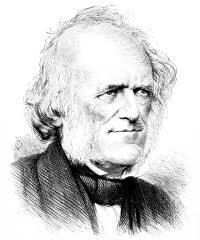
Portrait of Sir Charles Lyell Sir Charles Lyell,  Principles of Geology

“ Marine testacea.—The aquatic animals and plants which inhabit an estuary are liable, like the trees and land animals which people the alluvial plains of a great river, to be swept from time to time far into the deep; for as a river is perpetually shifting its course, and undermining a portion of its banks with the forests which cover them, so the marine current alters its direction from time to time, and bears away the banks of sand and mud against which it turns its force. ”
Source: Gutenberg

Portrait of Sir Charles Lyell Sir Charles Lyell,  Principles of Geology

“ In inland seas, where the tides are insensible, or on those parts of the borders of the ocean where they are feeble, it is scarcely possible to prevent a harbor at a river's mouth from silting up; for a bar of sand or mud is formed at points where the velocity of the turbid river is checked by the sea, or where the river and a marine current neutralize each other's force. For the current, as we have seen, may, like the river, hold in suspension a large quantity of sediment, or, co-operating with the waves, may cause the progressive motion of a shingle beach in one direction. ”
Source: Gutenberg

Get perspective with Kwize: daily news enlightened by great literature