Evaporation

Definition and stakes

Various,  Popular Science Monthly (1896)

“ The evaporation of fluids into air, like the dissolution of solids in water, is in its results, at any rate, a case of assimilation to the character of the surrounding or adjacent medium; so that, the more we heat a bar of iron, the more progress does it make toward that vaporous condition in which it can easily be diffused through its environment. ”
Source: Wikisource

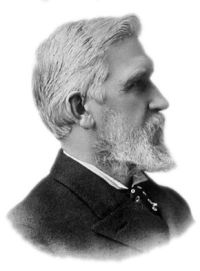
Portrait of Elisha Gray Elisha Gray,  Familiar Talks on Science: World-Building and Life…

“ Evaporation is carried on much more rapidly when the wind blows than at other times, for the reason that the moisture is carried off laterally as fast as it is formed, all resistance to its escape into the upper air being removed. If the air is charged to saturation with moisture at a certain temperature, it will remain so, and evaporation stops so [Pg 64] long as the temperature remains unchanged. If its temperature rises the process of evaporation can start up, because the capacity of the air for holding moisture has been increased. ”
Source: Gutenberg

Portrait of Gaston Tissandier Gaston Tissandier,  Popular Scientific Recreations

“ Evaporation may now be considered, and is distinguished from Ebullition by the production of vapour on the surface of liquids, the latter term signifying the formation of vapour in the body of the liquid. Evaporation takes place at all temperatures, and from every liquid surface exposed to the air. We know what we call a “drying wind.” The air in fresh layers continually passing over the wet ground, takes up the moisture; like the east wind, for instance, which has great capabilities of that nature. ”
Source: Gutenberg

Get perspective with Kwize: daily news enlightened by great literature