Summary

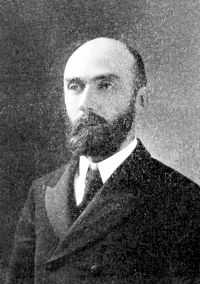
Portrait of Henry Paul Talbot Henry Paul Talbot An Introductory Course of Quantitative Chemical Analysis

It is obvious that anything which alters the weight of a single piece in an analytical set will introduce an error in every weighing made in which that piece is used. This source of error is often extremely obscure and difficult to detect. The only safeguard against such errors is to be found in scrupulous care in handling and protection on the part of the analyst, and an equal insistence that if several analysts use the same set of weights, each shall realize his responsibility for the work of others as well as his own.
Source: Gutenberg

Portrait of Henry Paul Talbot Henry Paul Talbot An Introductory Course of Quantitative Chemical Analysis

Since normal solutions of various reagents are all referred to a common standard, they have an advantage not possessed by empirical solutions, namely, that they are exactly equivalent to each other. Thus, a liter of a normal solution of an acid will exactly neutralize a liter of a normal alkali solution, and a liter of a normal oxidizing solution will exactly react with a liter of a normal reducing solution, and so on.
Source: Gutenberg

Portrait of Henry Paul Talbot Henry Paul Talbot An Introductory Course of Quantitative Chemical Analysis

It is sometimes necessary to calculate the value of solutions according to the principles just explained, when several successive reactions are involved. Such problems may be solved by a series of proportions, but it is usually possible to eliminate the common factors and solve but a single one. For example, the amount of MnO_{2} in a sample of the mineral pyrolusite may be determined by dissolving the mineral in hydrochloric acid, absorbing the evolved chlorine in a solution of potassium iodide, and measuring the liberated iodine by titration with a standard solution of sodium thiosulphate.
Source: Gutenberg

Get perspective with Kwize: daily news enlightened by great literature