Alkali

Definition and stakes

Project Gutenberg,  The Project Gutenberg Encyclopedia…

“ In modern chemistry alkali is a general term used for compounds which have the property of neutralizing acids, and is applied more particularly to the highly soluble hydrates of sodium and potassium and of the three rarer ``alkali metals,'' caesium, rubidium and lithium, also to aqueous ammonia. In a smaller degree these alkaline properties are shared by the less soluble hydrates of the ``metals of the alkaline earths,'' calcium, barium and strontium, and by thallium hydrate. An alkali is distinguished from an acid or neutral substance by its action on litmus, turmeric and other indicators. ”
Source: Gutenberg

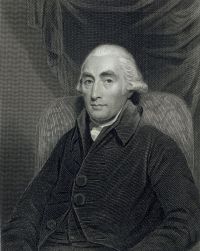
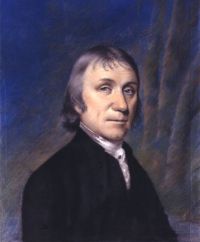
Portrait of Joseph Priestley Joseph Priestley,  Heads of Lectures on a Course of Experimental Philosophy…

“ The fixed alkalis are of vegetable or mineral origin. When in a solid form, they both melt with a moderate heat, and uniting with earthy substances, make glass. With an intense heat they are volatilized.
Vegetable alkali is procured by burning plants, and lixiviating the ashes; a purer kind by the burning of tartar, hence called salt of tartar; but the purest of all is got by the deflagration of nitre; the charcoal uniting with the acid as it assumes the form of dephlogisticated air, and the alkali being left behind.
”
Source: Gutenberg

Portrait of Joseph Priestley Joseph Priestley,  Heads of Lectures on a Course of Experimental Philosophy…

“ Like them, however, it dissolves ice, and deprives alum, and some other saline substances, of the water which they contain. United with fixed air, it makes the concrete volatile alkali; with marine acid air, the common sal-ammoniac; and with water, the caustic volatile alkali.
The electric spark, or a red heat, converts alkaline air into three times its bulk of inflammable air; and the calces of metals are revived in alkaline, as well as in inflammable air; but there remains about one-fourth of its bulk of phlogisticated air. These facts shew that alkaline air consists chiefly of phlogiston.
”
Source: Gutenberg

Get perspective with Kwize: daily news enlightened by great literature