Electrolysis

Definition and stakes

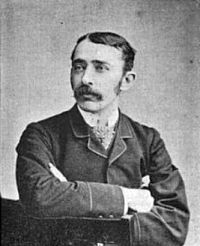
Portrait of William Arnold Anthony William Arnold Anthony,  Elementary Text-book of Physics (1897)

“ Those bodies which exhibit electrolysis are always such as have considerable freedom of motion among their molecules. Ordinarily, they are liquids or solids in solution or fused. The discharge through gases is also probably accompanied by electrolysis. Bodies which can be decomposed were called by Faraday, to whom the nomenclature of this subject is due, electrolytes. The current is usually introduced into the electrolyte by solid terminals called electrodes. The one at the higher potential is called the positive electrode or anode; the other, the negative electrode, or cathode. ”
Source: Wikisource

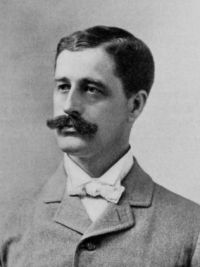
Portrait of James Clerk Maxwell James Clerk Maxwell,  A Treatise on Electricity and Magnetism (1873)

“ When the volume of the products of electrolysis is greater than that of the electrolyte, work is done during the electrolysis in overcoming the pressure. If the volume of an electrochemical equivalent of the electrolyte is increased by a volume v when electrolysed under a pressure p, then the work done during the passage of a unit of electricity in overcoming pressure is vp, and the electromotive force required for electrolysis must include a part equal to vp, which is spent in performing this mechanical work. ”
Source: Wikisource

Portrait of James Clerk Maxwell James Clerk Maxwell,  A Treatise on Electricity and Magnetism (1873)

“ But if the electrolysis is conducted in suitable vessels, such as U-shaped tubes or vessels with a porous diaphragm, so that the substance surrounding each electrode can be examined separately, it is found that at the anode of the sulphate of soda there is an equivalent of sulphuric acid as well as an equivalent of oxygen, and at the cathode there is an equivalent of soda as well as two equivalents of hydrogen. ”
Source: Wikisource

Get perspective with Kwize: daily news enlightened by great literature