Electric current

Definition and stakes

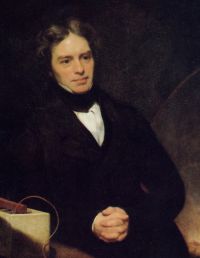
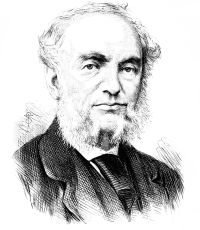
Portrait of James Clerk Maxwell James Clerk Maxwell,  A Treatise on Electricity and Magnetism (1873)

“ In the phenomenon called the electric current the constant passage of electricity through the medium tends to restore the state of polarization as fast as the conductivity of the medium allows it to decay. Thus the external agency which maintains the current is always doing work in restoring the polarization of the medium, which is continually becoming relaxed, and the potential energy of this polarization is continually becoming transformed into heat, so that the final result of the energy expended in maintaining the current is to raise the temperature of the conductor. ”
Source: Wikisource

W. H. McCormick,  Electricity (1915)

“ An electric current meets with some resistance in passing through any substance, and if the substance is a bad conductor the resistance is very great. As the current forces its way through the resistance, heat is produced, and a very thin wire, which offers a high resistance, may be raised to a white heat by an electric current, and it then glows with a brilliant light. This fact forms the basis of the electric incandescent or glow lamp. ”
Source: Gutenberg

Portrait of Balfour Stewart Balfour Stewart,  The conservation of energy (1881)

“ The electric current has likewise the property of heating a wire through which it passes. To prove this, let us connect the two poles of a battery by means of a fine platinum wire, when it will be found that the wire will, in a few seconds, become heated to redness. In point of fact, the current will heat a thick wire, but not so much as a thin one, for we may suppose it to rush with great violence through the limited section of the thin wire, producing in its passage great heat. ”
Source: Wikisource

Get perspective with Kwize: daily news enlightened by great literature