Electrification

Definition and stakes

Thomas M. St. John,  The Study of Elementary Electricity and Magnetism by Experiment

“ Can we conduct from one place to another this peculiar state of things, this queer form of potential energy which we call electrification? It is clear, from the last experiments, that in order to do it we need something besides ebonite, which really acts like a closed stop-cock to the flow of electrification.
To keep electrification in one place we need an insulator; to get it from one place to another we need a conductor. Insulators are as important as conductors.
”
Source: Gutenberg

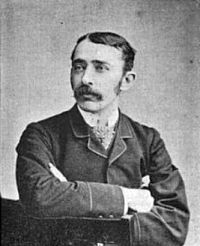
Portrait of James Clerk Maxwell James Clerk Maxwell,  A Treatise on Electricity and Magnetism (1873)

“ These quantities are supposed to be so great that no process of electrification has ever yet deprived a body of all the electricity of either kind. The process of electrification, according to this theory, consists in taking a certain quantity P of positive electricity from the body A and communicating it to B, or in taking a quantity N of negative electricity from B and communicating it to A, or in some combination or these processes. ”
Source: Wikisource

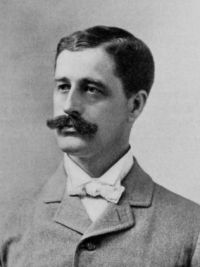
Gisbert Johann Eduard Kapp,  Electricity (1912)

“ Whether the one set of theorists or the other have come near a true explanation, or whether both are mistaken, is not a matter which need concern us; the important fact is that electrification is produced by the contact between two metals, and that the intensity of their electrification, or the force by which the two electricities are separated across the boundary line of the two surfaces, does not depend on the extent of the surface of contact, but only on the quality of metals used in the combination. The force is greater with some combinations and smaller with others. ”
Source: Wikisource

Get perspective with Kwize: daily news enlightened by great literature