Traction

Definition and stakes

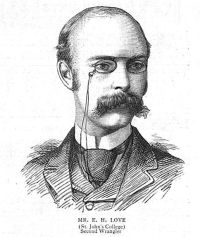
Portrait of Augustus Edward Hough Love Augustus Edward Hough Love,  1911 Encyclopædia Britannica (1911)

“ Surface tractions are always exerted by one body upon another, or by one part of a body upon another part, across a surface of contact; and a surface traction is always to be regarded as one aspect of a “stress,” that is to say of a pair of equal and opposite forces; for an equal traction is always exerted by the second body, or part, upon the first across the surface. ”
Source: Wikisource

E. J. Marey,  Popular Science Monthly (1879)

“ The other is formed of a similar spring placed in the very inside of the carriage-trace.
If you wish to be convinced of the advantage of this mode of traction, yoke yourself to a hand-barrow by means of a rigid leather strap, such as you see used in the streets of Paris or London, where too often man is employed to drag burdens. When you have well noted the painful shocks which this mode of traction transmits to the shoulders, place between the strap and the barrow the elastic tractor and repeat the experiment.
”
Source: Wikisource

Get perspective with Kwize: daily news enlightened by great literature