Summary

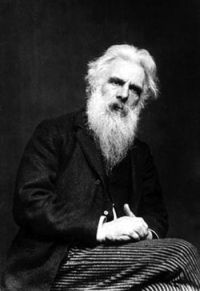
Portrait of Eadweard Muybridge Eadweard Muybridge Descriptive Zoopraxography; or…

Muybridge showed that many of our best artists have been in the habit of depicting animals in positions which they never assume in nature."—Chambers' Edinburgh Journal.
"The large school-room (Clifton College) was crowded. The head master presided. Loud applause and frequent laughter greeted the life-sized photographs from nature, which by a rapid revolution of the Zoopraxiscope, showed among other actions, the ambling of an elephant, the gallop of a race-horse, the somersault of a gymnast and the flight of a bird."—Bristol Mercury.
Source: Gutenberg

Portrait of Eadweard Muybridge Eadweard Muybridge Descriptive Zoopraxography; or…

A few days' experimenting and about a dozen negatives, with a celebrated fast trotter—"Occident"—as a model, while trotting at the rate of a mile in two minutes and sixteen seconds, laterally in front of the camera, decided the argument for once and for all time in favor of those disputants who held the opinion that a horse while trotting was for a portion of his stride entirely free from contact with the ground.
Source: Gutenberg

Portrait of Eadweard Muybridge Eadweard Muybridge Descriptive Zoopraxography; or…

With this apparatus, horse-races are reproduced with such fidelity that the individual characteristics of the motion of every animal can readily be seen; flocks of birds fly across the screen with every movement of their wings clearly perceptible; two gladiators contend for victory with an energy which would cause the arena to resound with wild applause, athletes turn somersaults, and other actions by men, women and children, horses, dogs, cats and wild animals, such as running, dancing, jumping, trotting and kicking, are illustrated in the same manner.
Source: Gutenberg

Get perspective with Kwize: daily news enlightened by great literature