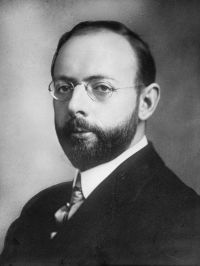
Herbert Eugene Ives

Herbert Eugene Ives

Summary

Portrait of Herbert Eugene Ives Herbert Eugene Ives Airplane Photography

It was the task of the observer in the plane to sketch the outlines of trenches, to count the vehicles in a transport train, to estimate the numbers of marching men, to record the guns in an artillery emplacement and to form an idea of their size. But the capacity of the eye for including and studying all the objects in a large area, particularly when moving at high speed, was soon found to be quite too small to properly utilize the time and opportunities available in the air.
Source: Gutenberg

Portrait of Herbert Eugene Ives Herbert Eugene Ives Airplane Photography

Blues are practically never seen, although it is to be noted that a fair share of the illumination of the ground is by blue sky light and that the haze itself is bluish. Consequently, the general tone of a landscape is much bluer than one would be apt to imagine it from consideration of the general green and brown character of the constituent objects. A color photograph from the air would greatly resemble a pastel in its low range of tones and the absence of bright colors.
Source: Gutenberg

Portrait of Herbert Eugene Ives Herbert Eugene Ives Airplane Photography

In making a mosaic map of a city, if a wide angle lens is employed with large plates, the buildings lying along the junctions of the prints can be matched up only for one level. If this is the ground level, as it would be to keep the scale of the map correct, the roofs will have to be sacrificed. In extreme cases a house at the edge of a junction may even show merely as a front and rear, with no roof, while in any case the abrupt change at these edges from seeing one side of all objects to seeing the opposite side is not pleasing.
Source: Gutenberg

Get perspective with Kwize: daily news enlightened by great literature